Expert guidance for your cruise vacation!
Let us connect you with our cruise expert to help you to plan the best vacation at the lowest possible price. For fastest service, call us at +91 9873153278
11 Days - Tantalizing Thailand & Sparkling Singapore - Star Seeker
Cruise Line: Windstar cruises
Ship: Star Seeker
Sailing Dates: Nov 25 2026 | Dec 06 2026 | Jan 06 2027 | Jan 27 2027 | Jan 28 2027 | Feb 08 2027 | Feb 19 2027
Port: Phuket, Thailand to Klong Toei (Bangkok), Thailand
( Note: Optional tours are available from most ports for an additional charge. )
11 Days - Tantalizing Thailand & Sparkling Singapore - Star Seeker
Madagascar & South Africa
Cruise Line: Ponant Cruises
Ship: Le-Bougainville | Le-Dumont-D-Urville
Sailing Dates: Dec 17 2026
Port: Durban - Nosy Be
( Note: Optional tours are available from most ports for an additional charge. )
Madagascar & South Africa
Ports of Call & Excursions
Day 1 - Durban
Situated in the Kwazulu-Natal region, the cradle of Zulu culture, Durban is the third largest city in South Africa and one of Africa's major ports. Between long beaches rocked by the rollers of the Indian Ocean and the skyscrapers dominating the avenues lined with jacarandas, in this multicultural city with African, Indian and colonial influences, the term "rainbow nation" takes on its full dimension. With a rich cultural and historical heritage, with its museums, colonial buildings and picturesque neighbourhoods, it is also known for the fauna and flora that surrounds it.
Day 2Â Â - 3 - Richards Bay
A simple fishing village in the past, Richards Bay is now South Africaâs second port. Despite the significant development of industrial activity, particularly in terms of mineral extraction, Richards Bay is one of the countryâs cleanest and most environmentally responsible towns. Bordering the Indian Ocean, the town is a haunt for water sport enthusiasts. In the heart of the Hluhluwe Game Reserve, nature lovers will be able to observe the wild fauna, made up of crocodiles, hippos and different bird species, as well as rich subtropical flora. Richards Bay is the departure point for many excursions heading off to discover Zulu country.
Day 4Â Â - 5 - At sea
During your journey at sea, make the most of the many services and activities on board. Treat yourself to a moment of relaxation in the spa or stay in shape in the fitness centre. Depending on the season, let yourself be tempted by the swimming pool or a spot of sunbathing. This journey without a port of call will also be an opportunity to enjoy the conferences or shows proposed on board, depending on the activities offered, or to do some shopping in the boutique or to meet the PONANT photographers in their dedicated space. As for lovers of the open sea, they will be able to visit the shipâs upper deck to admire the spectacle of the waves and perhaps be lucky enough to observe marine species. A truly enchanted interlude, combining comfort, rest and entertainment.
Day 6 - Toliara
Located to the south-west of the island of Madagascar, near the mouth of the River Onilahy, Toliara is a port town that opens onto the Mozambique Channel. Inhabited for several centuries, becoming prosperous during the colonial period in the 19th century, Toliara is a cheerful town with unspoilt nature and exceptional flora that will certainly appeal to fans of botany. The Antsokay Arboretum botanical garden with nearly 1,000 Madagascar plant species, 90% of which are endemic, is worth a fragrant and charming detour. Cultural heritage will not be outdone, with the interesting museums of Mahafaly ethnology and the Museum of the Sea.
Day 7 - Morondava
To the south-west of Antananarivo lies a peaceful city on the Mozambique Channel: Morondava, capital of the kingdom of Menabe, and departure point for many discoveries in the surrounding area. Bordered by the Mozambique Channel, the city is crossed by two rivers: the Mangoky and the Manambolo. Its many forests are full of abundant fauna and flora, especially the Kirindy Mitea National Park and its famous baobab alley.
Day 8 - At sea
During your journey at sea, make the most of the many services and activities on board. Treat yourself to a moment of relaxation in the spa or stay in shape in the fitness centre. Depending on the season, let yourself be tempted by the swimming pool or a spot of sunbathing. This journey without a port of call will also be an opportunity to enjoy the conferences or shows proposed on board, depending on the activities offered, or to do some shopping in the boutique or to meet the PONANT photographers in their dedicated space. As for lovers of the open sea, they will be able to visit the shipâs upper deck to admire the spectacle of the waves and perhaps be lucky enough to observe marine species. A truly enchanted interlude, combining comfort, rest and entertainment.
Day 9 - Majunga
A lively and cosmopolitan town on the west coast of Madagascar, Majunga, also called Mahajanga, will be a port of call rich in discoveries. The former capital of the Sakalava kingdom, then a significant interchange due to its prime position between Africa and the Middle East, the city displays an interesting cultural patchwork. Also renowned for its outstanding natural sites, this port of call will provide you with the opportunity to discover the Cirque Rouge, immense red sandstone formations classified as national heritage.
Day 10 - Nosy Komba
During your cruise, your ship will stop in Nosy Komba, otherwise known as âlemur islandâ. Not far from the Madagascar mainland, this volcanic island shaped like a gigantic turtle shell is covered in dense tropical rainforest. This vegetation is home to amusing black lemurs â furry orange-brown and black creatures that are surprisingly agile and call to each other from amongst the trees. The many small beaches and the emerald-coloured water make Nosy Komba a natural gem that only a select few visit.
Day 11 - Nosy Hara
Its limestone rock formations rising from the waters, or marine âtsingiesâ typical of Madagascar, make Nosy Hara both exceptional and immediately recognisable. Located to the north-west of Madagascar, the island is a protected area due to its incredible biodiversity. It is a veritable open-air aquarium inhabited by around 280 marine species. The rocky columns edged with gorgeous white-sand and pebble beaches fading into shades of deep blue make an idyllic place cut off from the world. Succumb to the charms of this untouched jewel that will welcome you into its stunning decor for a special experience. This is an ideal location for snorkelling.
Day 12 - Nosy Be
Nosy Be (from the Malagasy: Nosy meaning island and Be meaning large), in the Mozambique Channel, is located near the north-eastern coastlines of Madagascar. A former French protectorate, known under the promising name of âthe scented islandâ, of volcanic origin, it is located on a maritime route with access to India and Asia. Cosmopolitan, a boulevard of encounters, its mixed-race and multicultural population still remembers its past as a significant trading post. Today, its 321 km² enchant lovers of nature and idyllic beaches. Its sumptuous primary forest is home to animals that are endemic to the island as well as surprising flora.
Madagascar & South Africa
Cruise Line: Ponant Cruises
Ship: Le-Dumont-D-Urville
Sailing Dates: Feb 02 2027
Port: Nosy Be (Madagascar) To Durban
( Note: Optional tours are available from most ports for an additional charge. )
Madagascar & South Africa
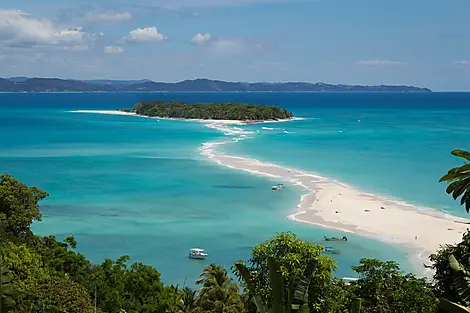
Day 1 - Nosy Be
Nosy Be (from the Malagasy: Nosy meaning island and Be meaning large), in the Mozambique Channel, is located near the north-eastern coastlines of Madagascar. A former French protectorate, known under the promising name of âthe scented islandâ, of volcanic origin, it is located on a maritime route with access to India and Asia. Cosmopolitan, a boulevard of encounters, its mixed-race and multicultural population still remembers its past as a significant trading post. Today, its 321 km² enchant lovers of nature and idyllic beaches. Its sumptuous primary forest is home to animals that are endemic to the island as well as surprising flora.
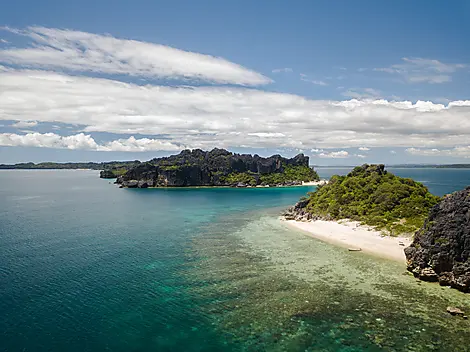
Day 2 - Nosy Hara
Its limestone rock formations rising from the waters, or marine âtsingiesâ typical of Madagascar, make Nosy Hara both exceptional and immediately recognisable. Located to the north-west of Madagascar, the island is a protected area due to its incredible biodiversity. It is a veritable open-air aquarium inhabited by around 280 marine species. The rocky columns edged with gorgeous white-sand and pebble beaches fading into shades of deep blue make an idyllic place cut off from the world. Succumb to the charms of this untouched jewel that will welcome you into its stunning decor for a special experience. This is an ideal location for snorkelling.
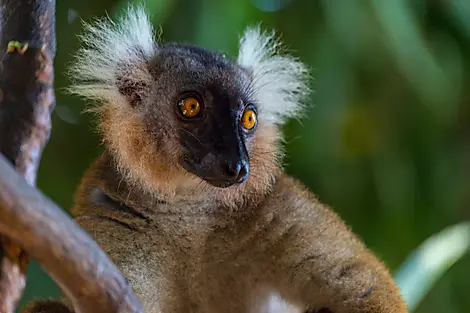
Day 3 - Nosy Komba
During your cruise, your ship will stop in Nosy Komba, otherwise known as âlemur islandâ. Not far from the Madagascar mainland, this volcanic island shaped like a gigantic turtle shell is covered in dense tropical rainforest. This vegetation is home to amusing black lemurs â furry orange-brown and black creatures that are surprisingly agile and call to each other from amongst the trees. The many small beaches and the emerald-coloured water make Nosy Komba a natural gem that only a select few visit.
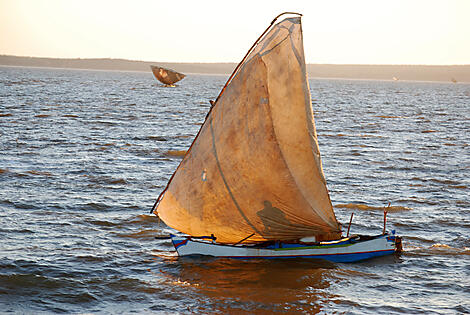
Day 4 - Majunga
A lively and cosmopolitan town on the west coast of Madagascar, Majunga, also called Mahajanga, will be a port of call rich in discoveries. The former capital of the Sakalava kingdom, then a significant interchange due to its prime position between Africa and the Middle East, the city displays an interesting cultural patchwork. Also renowned for its outstanding natural sites, this port of call will provide you with the opportunity to discover the Cirque Rouge, immense red sandstone formations classified as national heritage.
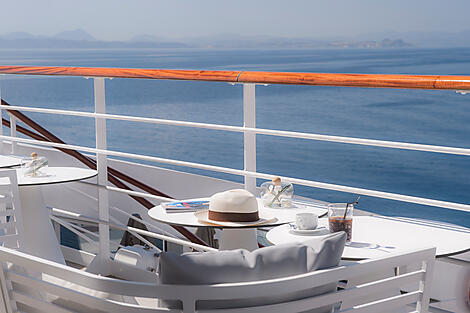
Day 5 - At sea
During your journey at sea, make the most of the many services and activities on board. Treat yourself to a moment of relaxation in the spa or stay in shape in the fitness centre. Depending on the season, let yourself be tempted by the swimming pool or a spot of sunbathing. This journey without a port of call will also be an opportunity to enjoy the conferences or shows proposed on board, depending on the activities offered, or to do some shopping in the boutique or to meet the PONANT photographers in their dedicated space. As for lovers of the open sea, they will be able to visit the shipâs upper deck to admire the spectacle of the waves and perhaps be lucky enough to observe marine species. A truly enchanted interlude, combining comfort, rest and entertainment.
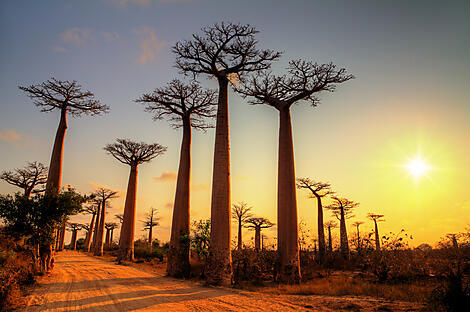
Day 6 - Morondava
To the south-west of Antananarivo lies a peaceful city on the Mozambique Channel. Capital of the Menabe region, Morondava opens the gates to some of Madagascarâs most striking landscapes. Nearby, the legendary Avenue of the Baobabs reveals a majestic alignment of giant trees, a natural monument unique in the world. With its mangroves, lagoons and wild beaches, this port of call invites you to discover an authentic and unspoilt side of the island.
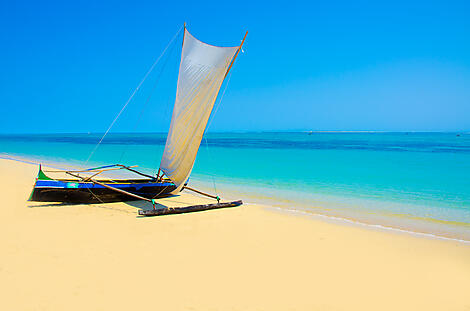
Day 7 - Toliara
Located to the south-west of the island of Madagascar, near the mouth of the River Onilahy, Toliara is a charming coastal town bordered by turquoise waters. Once an important trading post, it now offers a relaxed atmosphere and access to beautiful coral reefs. Its surroundings reveal arid landscapes, fishing villages and exceptional marine biodiversity, ideal for discovering local culture and nature.
Day 8 - 9 - At sea
Enjoy these days at sea to relax and take advantage of the many facilities on board. Between lectures, shows, spa treatments and moments on deck admiring the ocean, these sea days provide a perfect balance of comfort and discovery while sailing through the Indian Ocean.
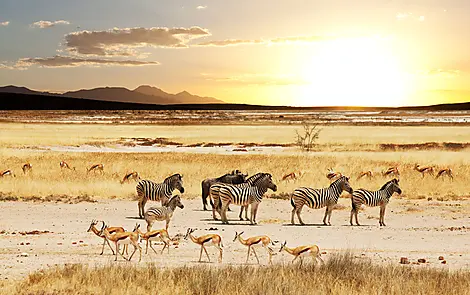
Day 10 - 11 - Richards Bay
A simple fishing village in the past, Richards Bay has become South Africaâs second largest port. Surrounded by nature reserves and wetlands, it offers access to exceptional wildlife experiences. From here, explore the iSimangaliso Wetland Park, a UNESCO World Heritage Site renowned for its ecosystems, or venture inland to discover Zulu culture and landscapes.

Day 12 - Durban
Situated in the KwaZulu-Natal region, the cradle of Zulu culture, Durban is South Africaâs third largest city. Bordered by the Indian Ocean, it is renowned for its long beaches, vibrant waterfront and multicultural atmosphere. This dynamic city marks the end of your voyage, leaving you with unforgettable memories of the Indian Ocean and Madagascarâs exceptional landscapes.
Complete East Greenland
Cruise Line: Polar Latitudes Expeditions
Ship: Ocean Albatros
Sailing Dates: Sep 17 2027
Port: Reykjavik, Iceland to Reykjavik, Iceland
( Note: Optional tours are available from most ports for an additional charge. )
Complete East Greenland
Day 1
Reykjavik, Iceland
The rock-like columns of HallgrÃmskirkja Church loom over the city of ReykjavÃk, a hip Scandi capital which needs little introduction. With new Nordic cuisine, excellent shopping, fantastic excursions and an easy relaxed vibe, ReykjavÃk is one of Scandinavia's most welcoming and exciting cities.
In the afternoon, we await to welcome our guests onboard Ocean Albatros. After our mandatory safety drill, enjoy dinner and a glass of champagne as we set sail a course for adventure as we set out across the Denmark Strait, bound for Greenland.
Day 2
At sea, Crossing the Denmark Strait
The Denmark Strait is the narrow section of the North Atlantic separating Iceland from Greenland. This body of water is among the most productive in the world, where the cold polar East Greenland Current collides with the warm northbound Gulf Stream. These nutrient-rich waters support vast stocks of fish, and the humans, seals, whales and seabirds which rely on them.
Days at sea are never dull. We will arrange a variety of activities onboard for our guests to enjoy to engage the mind, body and soul. Join your knowledgeable Expedition Team lecturers in the Theatre to hear specially-crafted lectures on Greenlandic history, wildlife, geology, culture and more, unwind with a massage in the Albatros Polar Spa, or simply watch the seabirds gliding along the ship from our hot tubs as the Ocean Albatros flies across the Denmark Strait.
Day 3
Kuummiut and Ikateq
We will spend the morning in the small village of Kuummiut, which sits in breathtaking surroundings in the calm reaches of Ammassalik Fjord. Kuummiut - meaning 'People who Live by the River' - is one of the larger villages in the area, and one of the most prosperous. Sitting upon some of East Greenland's richest fishing grounds, Kuummiut holds the only fish factory in the region, and fishermen from miles around come through Ammassalik Fjord (which is wide enough to stay mostly ice-free year-round) to sell their catch here.
Kuummiut is an ideal place to experience life in an East Greenlandic settlement. Where other towns have traffic, Kuummiut has the yowling of sled dogs and the sigh of the wind through the grass. No roads lead in or out of this isolated village, and the sea is the highway for local transport - although motorboats have replaced the skin boats which brought people to these shores long ago. It is a perfect place to simply sit, watch the icebergs pass, and perhaps see the whales which often frolic in the calm waters offshore.
In the afternoon, we will sail slightly eastward from Kuummiut to Ikateq, a spectacular fjord with a fascinating history. During the darkest days of the Second World War, American forces established an airbase here (one of the network of air bases which includes Kangerlussuaq on the west coast) to serve as a stepping stone for aircraft transiting between Europe and North America. The rugged landscape of East Greenland meant the approach into the airport was hazardous, with frequent fog masking the treacherous mountains. Huge recources were invested into Ikateq Airbase (also known as Bluie 2 East), with a 5,000ft runway, hangar, barracks and port constructed. A fleet of military vehicles and thousands of barrels of fuel were also brought to this remote region. With Germany defeated, improvements to intercontinental aircraft, and increasing tensions with the Soviet Union, the United States Military abandoned the base in 1947, leaving almost everything behind.
The air base has been a bone of contention between Nuuk, Copenhagen and Washington for many years. Many in the Greenlandic government wanted the site cleaned up and the ruins removed; an expensive and logistically challenging task. Eventually, the Danish Government agreed to remove hazardous waste from the site (mainly decaying fuel drums), leaving the rest of the equipment in place as an important part of regional history. Over 75 years later however, almost everything remains as it was on the day the Americans left. Ikateq is a truly unique place, a time warp to the Second World War: eerie, fascinating and surrounded by staggering natural beauty.
Day 4
Tasiilaq
In the morning we arrive in Tasiilaq, the largest settlement in East Greenland. Unlike the west coast, which has had uninterrupted contact with Europe since the 1700s, the coast of East Greenland remained more or less uncontacted until around 1894, when a Danish trading post was established at Tasiilaq. The vast distances involved in Arctic travel meant that the people of East Greenland (Tunumiit) were isolated from their cousins to the west, and the language, traditions and culture of East Greenland therefore differ significantly to those in other parts of the country.
Ancient traditions are strong here. This region of Greenland was the home of the last Angakkuit (Shamans) of Greenland, and is the home of the tupilak - a monster fashioned from animal (and sometimes human) body parts and animated by the power of an Angakkuq to wreak havoc on enemies. Creating such a monster was dangerous, as it could be turned back by a more powerful magic user to attack its creator. The first Europeans were curious as to what these dark beasts looked like, and locals carved facsimiles in bone or horn, beginning one of Greenland's finest artistic traditions. The tupilaat made by artisans in Tasiilaq are considered among the best in the country.
Tasiilaq sits in a perfect natural harbour on Ammassalik Island (meaning 'the Place of Many Capelin'). While superficially similar to towns on the West Coast, visitors will quickly notice differences; the landscape here is much more rugged, the people fewer, and the sled dogs much more numerous. Tasiilaq offers excellent opportunities to explore, with excellent hiking routes such as the Flower Valley easily accessible from town. For those wishing to delve into Tunumiit culture, visit the museum, located in the city's old church, hear the city's exquisite choir perform in the modern church, or watch a drum dancer in traditional East Greenlandic costume perform a millennia-old spiritual tradition. For those wishing to indulge in some retail therapy, visit the Stunk Artist's Workshop, where skilled craftsmen create beautiful pieces from natural local materials.
Day 5
At sea, en route to Ittoqqortoormiit
Sailing along the coastline of this vast island (where reaching the next-closest town takes two nights and a day of sailing), it can be difficult to comprehend the scale of this huge country.
Measuring roughly four times the size of France, Greenland dominates the Atlantic portion of the Arctic, covering latitudes from 59-83°N, and 11-74°W. Around 80% of Greenland is covered by the Greenland Ice Sheet (known as Sermersuaq or 'The Great Ice' in Greenlandic), the largest body of ice on earth outside Antarctica. The Greenland Ice Sheet is so vast that it governs the weather patterns of the region, with summer meltwater and winter ice largely driving ocean currents in this part of the North Atlantic.
Despite the lack of towns, the stretch of coastline between the Ammassalik and Scorsesbysund region is of vital importance to the residents of the area. During the summer, locals hunt whales, seals and other game by boat along the coast of this vast wilderness, as their ancestors have done since time immemorial. Some skilled hunters still choose to use kayaks to sneak up on skittish prey like narwhals - continuing a millennia-old hunting tradition. While some choose to use snowmobiles in winter to traverse the sea ice which hugs the coast, most hunters choose to use dogsleds, which are more reliable, rugged, and do not rely on fuel. In this challenging country, ancestral traditions are still superior to the trappings of modern life.
Day 6
Ittoqqortoormiit
Entering Scoresbysund, Earth's largest and longest fjord system, one could be forgiven for not realising this huge 35km inlet is a fjord at all! Scoresbysund is named for English whaler and explorer William Scoresby, one of the first Europeans to map this region; the local name for this vast fjord system, Kangertittivaq, is a typical Greenlandic understatement, roughly meaning 'The Rather Large Fjord'.
The only settlement in this region is Ittoqqortoormiit (meaning 'the People who Live in Big Houses), which surely ranks among the most remote communities on Earth. As the name suggests, the town is relatively new, having been established by Danish authorities in 1925. Colonists were relocated from the Ammassalik region further south in response to what were seen as poor living conditions in the area, as well to establish Danish sovereignty in the region during a territorial dispute with Norway. While the establishment of the town was challenging, the settlers soon realised the region was hugely rich in game, with excellent hunting and trapping opportunities. This tradition continues to this day - the majority of residents continue to live a subsistence hunting lifestyle, essential in a town where supply ships arrive only once or twice each summer. The only access to the outside world is via the heliport to the nearby airport, from where small aircraft depart for Iceland.
Ittoqqortoormiit is a town with a strong sense of community and traditional culture, where foreigners are welcomed warmly. The town hosts an excellent museum, a beautiful traditional Greenlandic church, and locals often welcome visitors to their community wearing colourful traditional costumes. The town represents a wonderful introduction to the culture and lifestyle of Northeast Greenland, in one of the most spectacular natural locations anywhere in the world.
Day 7-9
Northeast Greenland National Park
During the night we cruise past the rugged peaks of the Liverpool Land peninsula and reach the mouth of King Oscar Fjord. We are now in the vast Northeast Greenland National Park; measuring almost a million square kilometers (almost twice the size of France), this is the largest National Park and the largest area of protected land on Earth and includes the northernmost land on the planet.
There are no permanent settlements in the area, but up to the middle of the 19th Century various nomadic Inuit hunters lived in this spectacular region, harvesting the natural riches of the area.
The program for our days in the National Park depends on wind, sea, weather and ice conditions. In such a remote region so far north, Mother Nature dictates all human activity. Our exact route and activities will be determined by the Captain and the Expedition Leader jointly and are typically announced the night before.
Some of the interesting landings we may visit include the 1300-meter-high rock wall Bastionen on the coast of Ella Island. Further north we may pass pass the small Maria Island, where the Germans had a camp during World War II. The Germans' attempt to gain a foothold in Greenland during World War II is a fascinating story in itself. Past Ruth Island, we hope to make a landing on Ymer Island at Blomsterbugten, a small oasis in the national park. From the tiny hunting lodge Varghytten we can enjoy the formidable view of the characteristic, flat mountain Teufelsschloss, where the multicoloured rock layers testify to the area's exciting geological development. From here, we may aim to sail by the mighty iceberg-producing Waltershausen Glacier before entering beautiful Moskusokse Fjord. On our way back towards open sea we might aim for landings on Jameson Land, which is a breeding ground for polar bears.
Wherever we go in this vast wilderness, our guests can be sure of encountering excitement, adventure, and mind-boggling natural beauty. Our experienced Expedition Team will be on hand to provide guests with as much knowledge of the region as possible; either in hand-crafted lectures, evening recaps, onshore, or over a cup of coffee on deck. Throughout our time in the National Park, our skilled Expedition Team members will be constant lookout for the charismatic wildlife of the region - keep your binoculars handy!
Day 10
Blosseville Coast
Possibly the most dramatic coast outside of Antarctica, the Blosseville is guarded by Greenlandâs highest mountains and steepest fjords â and a belt of pack ice which was once able to ward off explorers, sometimes for years at a time!
The Blosseville Coast is named for French Explorer Jules de Blosseville, the first European to sight this formidable coastline. While attempting to survey the coast in 1833 onboard the vessel La Lilloise, the vessel and all onboard were lost without a trace. Subsequent expeditions failed to find any trace of the vessel, and its fate remains a mystery to this day.
The recent decades have also had warmer summers and reduced sea ice cover, which enables purpose-built ice-strengthened vessels such as the Ocean Albatros to venture along the coast, on lookout for polar wildlife, abandoned Inuit settlements and otherworldly landscapes.
Day 11
At sea, en route to Reykjavik, Iceland
During our time at sea approaching Reykjavik, a variety of activities will be arranged on board to provide our guests with the chance to reflect on their voyage. Relax with an expertly crafted cocktail in the Nordic Bar in the company of new friends, soak up the knowledge and passion of our Expedition Team during lectures, or simply enjoy the flight of the fulmars which accompany us towards Iceland.
During your last evening onboard, join the Captain and Officers for the Farewell Cocktail Party, followed by a presentation of photos and video by our onboard photographer - the ideal opportunity to re-live your Arctic adventure. Skal!
Day 12
Reykjavik, Iceland
As the Icelandic capital comes into view on the horizon, strange objects appear; trees larger than ankle height, glassy skyscrapers and streets full of cars, busses and people... Such a bustling capital may feel strange after the remote wilderness of Greenland!
After a hearty breakfast, it is time to bid a fond farewell to the Crew and Expedition Team of Ocean Albatros, and descend the gangway back to dry land with memories of the voyage of a lifetime.
12 Days - Kyoto & East Asia Dreams Cruise Tour - Star Seeker
Cruise Line: Windstar Cruise
Ship: Star Seeker
Sailing Dates: Nov 03 2026 | Mar 01 2027
Port: Osaka to Halong Bay (Hanoi)
( Note: Optional tours are available from most ports for an additional charge. )
12 Days - Kyoto & East Asia Dreams Cruise Tour - Star Seeker
Crossing the Circle
Cruise Line: Polar Latitudes Expeditions
Ship: Ms Seaventure
Sailing Dates: Feb 04 2026
Port: Ushuaia to Ushuaia
( Note: Optional tours are available from most ports for an additional charge. )
Crossing the Circle
Day 1
Arrive and explore in Ushuaia
After a friendly welcome at the airport and a transfer to the luxurious Arakur Ushuaia Resort & Spa, take some time to unwind or explore the southernmost city in the world, Ushuaia. (In the unlikely event that you can't be accommodated at the Arakur, you'll unwind at another of Ushuaia's top luxury hotels.)
Our optional evening briefing is your opportunity to ask questions and meet some of your fellow explorers.
Day 2
All Aboard!
Spend your morning relaxing at the hotel, visiting a museum, or exploring the shops in Ushuaia, before our mid-afternoon escort to the ship. Our Expedition Team and ship staff will welcome you on board and get you settled in, followed by a safety and orientation briefing and our Captainâs welcome dinner. Weâre on our way to Antarctica!
Day 3-4
Drake Passage
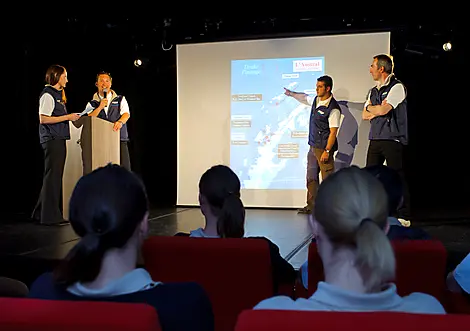
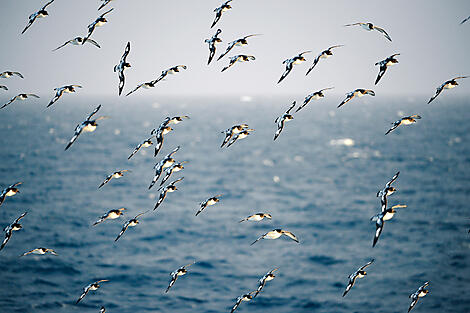
Join our Polar Experts as they share their vast knowledge of Antarctica, from its enchanting wildlife to its bold history. Participate in our pioneering Citizen Science program or sit back and take in this fabled journey while catching glimpses of rarely seen wildlife. Keep your binoculars handy to identify the many seabirds that escort our ship as we cross the Antarctic Convergence into Antarcticaâs waters and noticeably cooler temperatures.
Day 5
South Shetland Islands
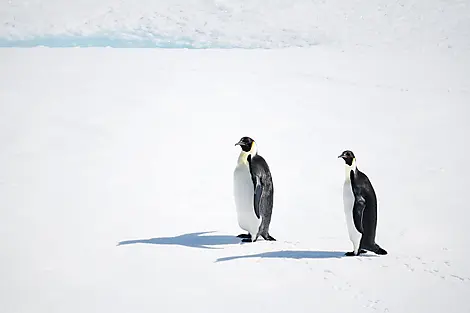
Over time, the volcanic activity of the South Shetland Islands has created a geology unlike any other. Here, you can expect a spectacular display of mountains, glaciers, and wildlife including Chinstrap and Gentoo penguins; and itâs not uncommon to share the waterâs edge with Elephant and Fur seals. Whales are often spotted as well. So, weâll settle into our Zodiacs and spend most of our day exploring. And kayakers, itâs time to get your first taste of gliding just inches off the pristine Antarctic water. Whether on land or sea, in Zodiac or kayak, be prepared for a fully immersive introduction to this incomparable part of the world.
Day 6-8
Antarctic Circle
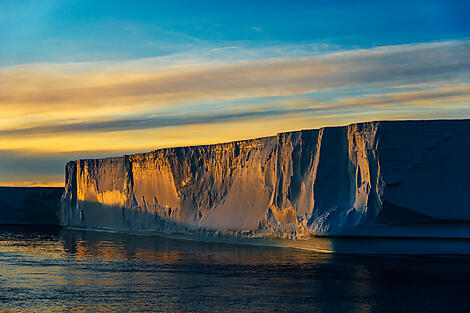
Heading south across the Bransfield Strait, we begin to see the breathtaking outline of the Antarctic Peninsula. Wildlife sightings, including penguins, whales, and fur seals, become more frequent, as do dramatic ice sculptures. Should Antarcticaâs unpredictable weather and ice permit, you will be among the lucky few to cross the Antarctic Circle, where the sun remains in the sky for 20 hours a day. Following a tradition first established by sailors crossing the equator, weâll celebrate the occasion by⦠(Sorry, you just have to be there), before heading onward toward any number of historic and rarely visited British Survey bases, after which we turn back north.
Day 09-11
Antarctic Peninsula
Heading north into warmer climes, weâll see less sea ice and more open channels, offering access to islands where we can anticipate any number of wildlife sightings, which could include a variety of seal species, as well as penguin rookeries where the locals will be taking advantage of the rocky shore to build their nesting sites. You can anticipate more whale sightings, as well, as Humpbacks feast on the plentiful krill in these warmer waters. As always, we will seek out opportunities to stop at several active scientific bases and historic landing sites along the way, as we leave no opportunity unseized-upon in our quest to explore the very best of this magical place.
Day 12-13
Drake Passage
We leave this magical place and make our way north, once again heading across the Antarctic Convergence and the Drake Passage. We have one last hurrah as we celebrate the conclusion of our expedition with a special slideshow and a final meal together.
Day 14
Ushuaia Disembarkation
With huge smiles on weary, content faces, we disembark in the morning, letting you catch a flight to Buenos Aires or stay in Ushuaia for more sights and adventure.
The Essentials of the Caribbean
Cruise Line: Ponant Cruises
Ship: Le-Bellot | Le-Laperouse
Sailing Dates: Feb 10 2026 | Mar 22 2027
Port: Fort-de-France (Martinique) to Fort-de-France (Martinique)
( Note: Optional tours are available from most ports for an additional charge. )
The Essentials of the Caribbean
Day 1 - Fort-de-France
Located on the western coast of Martinique, Fort-de-France will amaze you by the splendour of its bay, a magnificent cut-out in the coastline, considered as one of the most beautiful in the world. At the harbour mouth, on its strip of land, fort Saint-Louis overlooks the capital city of Martinique. If you climb up to it, you can see some breath-taking views. Saint Louis Cathedral and the Schoelcher library bear witness to a secular history, intimately linked to the islandâs story. Why not try some fresh coconut at the colourful Grand Marché. Two really pleasant places you can take a breather in, right in the heart of the city, are the garden of Balata and the Aimé Césaire park.
Day 2 - Antigua
Between white sandy beaches and lush tropical forest, you will discover Antigua, the largest of the two islands that make up Antigua-and-Barbuda, a sovereign Commonwealth state. From its British colonial heritage, this picture-postcard island has kept English as its official language and a pronounced taste for cricket! The steep hillsides of the south of the island offer splendid vistas over English Harbour and the Antigua shipyard, a building dating from the 17th century and a UNESCO World Heritage Site, and over Indian Creek, where the first Awarak Indians settled. To the east, the clear waters of the village of Seatons are the ideal site for snorkelling alongside the rays.
2 available excursions
Discover Antigua, Adventure & beach break
Day 3- South Friars Bay, Saint Kitts
Nestling along the peninsula of Saint-Kitts Island, South Friars Bay shelters one of the Kittitiansâ most popular beaches. You will find this gorgeous stretch of golden sand ideal for a spot of sunbathing, or you may prefer to go and discover the history of the island. Listed as a UNESCO World Heritage Site, Brimstone Hill Fortress National Park is a remarkable example of military architecture from the 17th and 18th centuries. It affords an exceptional view of the islandâs coast.
2 available excursions
Essential of Saint Kitts, Snail & snorkel
Day 4 - Jost Van Dyke
During your cruise, discover the pearl of the British Virgin Islands, said to have been named after a fearsome Dutch pirate from long ago. he hilly landscape offers travellers beautiful wild expanses lined with immaculate beaches where the breeze gently caresses the coconut palms. In this slice of heaven with crystal-clear waters, you will be able to enjoy the lively atmosphere of White Bay. As for the wildlife, iguanas, mongooses, pelicans and blue herons have taken up residence on these islands, much to the delight of our passengers who love a good holiday snap!
2 available excursion
Snorkelling at Norman Island, Relaxation on White Bay Beach
Day 5- Gustavia
Lovers of this island call it Saint-Barth. This French island in the Lesser Antilles was discovered by Christopher Columbus in 1493. Ever since, this tiny mountainous volcanic gem with its unspoilt nature has been enchanting visitors. You will enjoy the beauty of its large paradisiacal beaches, plus the charm and refinement of its old wooden houses and its sumptuous colonial manors. Although, as you saunter through the rues de Gustavia or Saint-Jean, youâll come across jewellers, top fashion boutiques and fine restaurants, there is also a simplicity that money canât buyâ¦
4 available excursion
The Leeward Coast by catamaran, The panoramas of Saint-Barthelemy, Snorkelling and boat excursion, Ernest's island tour
Day 6 - Les Saintes
During the feast of All Saints in 1493, Christopher Columbus discovered this archipelago of nine islands that he named "The Saints". Today, only two of them are inhabited. Terre de Haut, in the east, is dominated by the Morne Mire hill; at the summit stands Fort Napoleon, paying homage to the islands' history. In the heart of the botanical garden, shared by iguanas and cacti, there is an exceptional view of the Baie des Saintes, one of the most beautiful in the world. The long shady beach of Pompierre, where it is forbidden to drop anchor, is a peaceful place for a swim, while Pain de Sucre Beach offers wonderful opportunities for snorkelling. On the island, donât forget to taste the local speciality, the âtourment dâamourâ, a cake made with coconut.
4 available excursion
Walking tour & Napoleon fortress, Forl Caroline hike, Les Saintes by boat & swimming
Day 7 - Portsmouth
With its mountainous terrain, vast tropical forest, hot springs, rivers and spectacular waterfalls, Dominica is undoubtedly the wildest island in the Caribbean. Protected by several national parks, this little-known land, located in the heart of the Caribbean Sea, between Guadeloupe and Martinique, will inspire adventure and exploration. During your port of call, do not miss out on discovering the enchanting landscapes of the Indian River: navigating through this dense mangrove, in which creepers, ferns, forest trees and giant roots are interweaved, is a magical experience, a fascinating voyage into the heart of an almost mystical natural universe.
4 available excursion
Indian river by Rowboat, Syndicate Nature trail, Choclate between history & tasting, Traditional Kalinago cultural experience
Day 8 - Pigeon Island Beach
Linked to St Lucia by a sand causeway, Pigeon Island has been a designated National Park since 1979. On this wild and pristine land, you will be inspired to take pleasant walks amid the tropical vegetation and through a magnificent tree-filled garden. You will also be irresistibly drawn to the two pretty little sandy beaches nestling on the southern side and bathed by crystal-clear waters. While snorkelling, be sure to explore the underwater world that is teeming with life, along the rocks lining this peninsulaâs coast. You will thoroughly enjoy the calm and beauty of this place, which is really conducive to simply relaxing.
3 available excursion
St Lucia's flavours with Chef Orlando, Ziplining in Saint Lucia's forest, Soulfrier by sea& land
Day 8 - Soufriere
Nestled in the crook of a breath-taking bay, the former capital of St Lucia is brimming with attractions. Soufrière is famous for The Pitons, volcanic spires that tower over the entrance to the town. In the vicinity of the lush botanical gardens, you will be able to enjoy the curative powers of the Diamond Falls mineral baths. From the beach at the north end of the bay, you can set off to explore the reefs that are home to stunning gardens of sea fans at the foot of the cliffs that plunge into the sea.
1 available excursion
Wonders of Soufriere
Day 9 - Tobago Cays
Scattered between St Vincent and Grenada, the Tobago Cays comprises five little islands: Petit Rameau, Petit Bateau, Baradal, Petit Tabac and Jamesby. This rosary of uninhabited cays in the southern West Indies is a marine park whose turquoise lagoons provide a home and safe haven for some outstanding marine fauna, including peaceful green turtles. Girded and united by a coral reef, these secluded islands are a peaceful paradise for divers, swimmers and snorkellers.
1 available excursion
Snorkelling and catamaran in Salt Whistle Bay
Day 10 - Mayreau Island
Among the string of paradisiac islands with their sandy beaches that form the Saint Vincent and the Grenadines archipelago, Mayreau is the smallest. Its peaceful and idyllic atmosphere, far from the madding crowd, invites you to relax. On shore, enjoy a shaded and fully equipped beach from which to go snorkelling if youâd like to observe the colourful fish around the coral sitting at the foot of the rocks that stretch across the bay.
1 available excursion
Relaxation and barbecue on Mayreau Island
Day 11 - Port Elizabeth, Bequia Island
In the heart of the Caribbean, Bequia is the second-largest of 32 islands that make up the country of St Vincent and the Grenadines. You will love the lively and picturesque atmosphere of Port Elizabeth, the islandâs main town. From the port, a promenade lined with beautiful traditional houses, landscaped gardens and small restaurants runs along the shoreline. It leads to Princess Margaret Beach, a wild beach where Princess Margaret herself has stayed and which seems to emerge directly from the tropical forest. From rainforest to lush meadows and long stretches of sand, Bequia will offer you a natural setting that is conducive to lovely walks and to spending time on the beach.
3 available excursion
Catamaran & snorkelling, Relax at lower bay beach
Day 12 - Union Island
Deserted bays, long stretches of golden sand, turquoise waters and endless coral reefs â Union Island is without a doubt one of the most beautiful islands in the Caribbean. Overlooked by soaring peaks, this strange little strip of land owes its nickname of âthe Tahiti of the West Indiesâ to its volcanic silhouette and its large swathes of greenery. When you call here, you will discover what the locals consider to be âthe best-kept secret in the Grenadinesâ -Chatham Bay. Surrounded by hills and valleys carpeted in tropical rainforest, sheltering many sea turtles, this delightful half-moon of sand is, each day, the setting for the tireless ballet of the numerous pelicans who inhabit the island.
1 available excursion
Relax on chatham beach
Day 13 - Fort-de-France
Located on the western coast of Martinique, Fort-de-France will amaze you by the splendour of its bay, a magnificent cut-out in the coastline, considered as one of the most beautiful in the world. At the harbour mouth, on its strip of land, fort Saint-Louis overlooks the capital city of Martinique. If you climb up to it, you can see some breath-taking views. Saint Louis Cathedral and the Schoelcher library bear witness to a secular history, intimately linked to the islandâs story. Why not try some fresh coconut at the colourful Grand Marché. Two really pleasant places you can take a breather in, right in the heart of the city, are the garden of Balata and the Aimé Césaire park.
Odyssey in the heart of Japan's subtropical islands[Hong Kong - Naha, Okinawa]
Cruise Line: Ponant Cruises
Ship: Le-Jacques-Cartier
Sailing Dates: Feb 22 2026
Port: Hong Kong - Naha, Okinawa
( Note: Optional tours are available from most ports for an additional charge. )
Odyssey in the heart of Japan's subtropical islands[Hong Kong - Naha, Okinawa]
Ports of Call & Excursions
Day 1 - Hong Kong
Hong Kong, known as the âFragrant harbourâ, bordered by the South China Sea, is a heady place attracting tourists from the world over. This former British colony today combines ultramodern shopping malls and authentic markets like the Ladieâs Market or the night market on Temple Street. At first sight, youâll be overwhelmed by the cityâs architecture which, because of lack of ground space, reaches skywards, with its 1,250 skyscrapers and other towers. Believing is seeing, so if you go up to Victoria Peak, the highest point on the island, youâll see a dizzying and unforgettable view of the bay.
Day 2Â Â - 3 - At sea
During your journey at sea, make the most of the many services and activities on board. Treat yourself to a moment of relaxation in the spa or stay in shape in the fitness centre. Depending on the season, let yourself be tempted by the swimming pool or a spot of sunbathing. This journey without a port of call will also be an opportunity to enjoy the conferences or shows proposed on board, depending on the activities offered, or to do some shopping in the boutique or to meet the PONANT photographers in their dedicated space. As for lovers of the open sea, they will be able to visit the shipâs upper deck to admire the spectacle of the waves and perhaps be lucky enough to observe marine species. A truly enchanted interlude, combining comfort, rest and entertainment.
Day 4 - Ishigaki
Located to the south of the main island of the Yaeyama archipelago, Ishigaki boasts all the aspects of an authentic piece of paradise. You have guessed it, you do not come here for its skyscrapers but for its pure emerald waters and idyllic beaches. The waters off Shiraho, on the island's south-west coast, have one of the largest areas of blue coral in the world.
Day 5 -Taketomijima
Off the coast of the Okinawa Prefecture, Taketomi Island (Taketomijima) is fascinating for its traditional character, preserved in a beautiful, lush setting. Like its big sisters, Ishigaki and Kuroshima, this island in the Yaeyama archipelago is the ideal destination for an immersion in typical landscapes and the insular way of life of the former Ryukyu Kingdom. Here, time seems to have stood still. There are very few cars about; bicycles and carriages drawn by imposing oxen remain the only means of transport. This is an ideal opportunity to wander through the picturesque streets lined with traditional dwellings with red-tiled roofs and lion-shaped shisa statues placed in front of the vast majority of houses to keep evil spirits at bay.
Day 6 - Iriomotejima
Nestled in the very heart of the Yaeyama archipelago, Iriomote Island conjures visions of a hidden paradise. With 90% of the island covered by thick jungle, crossed by rivers and impressive mangrove forests, Iriomote is an ideal destination for fans of large preserved spaces. With exceptional fauna and flora, this lush jewel is home to many endemic species: you may be lucky enough to get to glimpse an Iriomote cat or a crested serpent eagle. During this port of call, you will also have the possibility of admiring the captivating underwater world during a free diving session or contemplating this lush jungle close up on a cruise along the calm waters of the islandâs rivers.
Day 7 - Yonagunijima
The geographic situation of the island of Yonagunijima, the most remote and western in the Japanese archipelago of Okinawa, makes it a wild and preserved territory. Between cliffs plunging into the sea and white sandy beaches, lush meadows and palettes of blue, we can admire the last sunset every day here in the Land of the Rising Sun. The island is also renowned for the Yonaguni horses, a small breed standing only a metre high, which graze freely here. If you dive, Yonagunijima will delight you with its sea beds which are as exceptional as they are mysterious.
Â
Day 8 - Miyakojima
Situated between the East China Sea and the Philippine Sea, Miyakojima is the main island of the Miyako Islands, in the Sakishima archipelago. The fourth largest island in the Okinawa prefecture, it is known for its many sugar cane plantations and some of Japanâs most beautiful beaches. Myriad multicoloured fish await you during unforgettable swims and snorkelling.
Day 9 - Kumejima
Located 90 km (56 miles) to the south-west of Okinawa Honto, Kumejima is a multifaceted island home to natural treasures. Hatenohama, a stunning 7 km-long (4.3 miles) fine-sand beach, promises wonderful carefree moments discovering the exceptional underwater worlds off the coast of Kumejima. Mifuga, a rock formation on the north coast of the island with a hole right through its middle, is a great example of the erosion along the coast. The eastern peninsula offers another geological feature, visible at low tide: 1,000 flat rocks each around one metre (3.2 feet) in diameter, formed by the contraction of lava from a nearby eruption a million years ago. They create a rocky plateau resembling a traditional Japanese tatami, hence the name Tatami-ishi.
Day 10 - Iheyajima
The northernmost island of the prefecture of Okinawa, Iheyajima is a small territory that will take you back in time. At the heart of preserved natural landscapes that are a reminder of the Okinawa of the past, the inhabitants perpetuate traditional culture, particularly by maintaining ancient rites and ceremonies in honour of the divinities of the Ryukyu Kingdom. The island is home to several historic sites, such as the tomb of the ancestors of King Sho Hashi, the unifier of Okinawa and founder of the Ryukyu Kingdom, which was independent from Japan until the end of the 19th century. In this natural setting, whose emblematic Nento-Hiramatsu pine tree is a national monument, perhaps you will enjoy the privilege of seeing a traditional âEisaâ drum performance.
Day 11 - Motobu, Okinawa
To the north of the island of Okinawa, lying between the azure ocean and lush hills, Motobu inspires contemplation. This Japanese paradise, far off the beaten track, unveils landscapes steeped in poetry. A setting of pristine nature, with Mount Yae as a backdrop, Motobu reveals itself through its white sandy forests and its wild and preserved Yambaru forest, home to a rare wealth of fauna and flora. The hiking paths invite you to explore this incomparable nature, where every step reveals breathtaking panoramas and age-old legends.
Day 12 - Zamami
Zamami is an island in the Kerama archipelago, 40 km (25 miles) west of Okinawa Island in the China Sea. Visitors to this 16 km2 (6 mi2) quasi-uninhabited isle are enchanted by the many untouched natural treasures they find here. You will discover a tranquil island with lush vegetation, lined with stunning white-sand bays bathing in the glimmering âKerama blueâ waters around the archipelago. Zamami is also renowned for the beauty of its coral reefs, where multicoloured fish engage in an endless mesmerising ballet. The observation deck on Mount Takatsuki reveals stunning views of the Kerama Islands, granted national park status in 2014. With subtle shifting shades of azure above and all around, this island truly is paradise.
Day 13 - Naha, Okinawa
Capital of Okinawa Prefecture, the town of Naha is located on the south-west of the island. You will love its lively atmosphere, particularly along Kokusai Dori, otherwise known as 'international street'. The picturesque Makishi Public Market, nicknamed 'Naha's kitchen' offers a profusion of colourful fish, Okinawan foodstuffs and local spices and you can sample delicacies cooked on the spot.
Authentic Japan
Cruise Line: Ponant Cruises
Ship: Le Soleal
Sailing Dates: May 07 2026 | Mar 14 2027
Port: Osaka - Busan
( Note: Optional tours are available from most ports for an additional charge. )
Authentic Japan
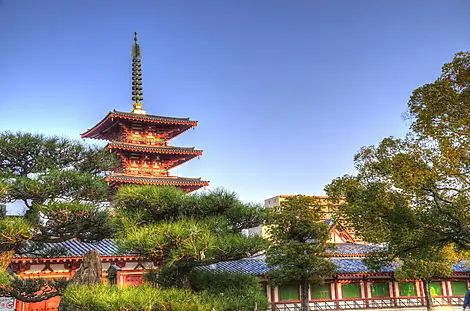
Day 1 - Osaka
Like its big sister Tokyo, Osaka is the product of ancestral traditions and amazing technological innovations. And despite its size, its location on the Pacific Ocean give it a sense of serenity. The main historic landmark is the 16th century Osaka Castle, which stands proud in the midst of majestic skyscrapers. The lively streets of Dotomburi and the bizarre Shinsekai district attract thousands of locals and visitors. A multitude of restaurants offer menus full of regional specialities: takoyaki, made with octopus, and other succulent dishes such as kushikatsu kebabs.
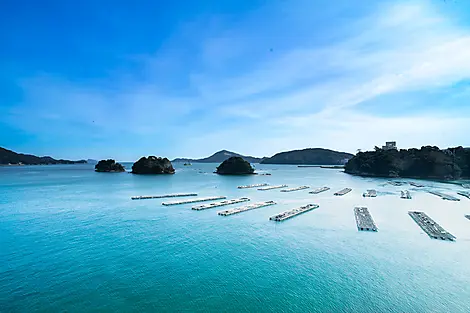
Day 2 - Toba
Toba is a coastal city located in Japanâs Mie Prefecture, on the shores of the Pacific Ocean. Situated in the Ise-Shima National Park, Toba has given its name to majestic bay sheltering a string of small islands, famous for the beauty of their forests and the production of cultured pearls. You will have the possibility of discovering the Ise Shrine, residence of the Imperial family and venerated by the Japanese people as the âsoul of Japanâ.
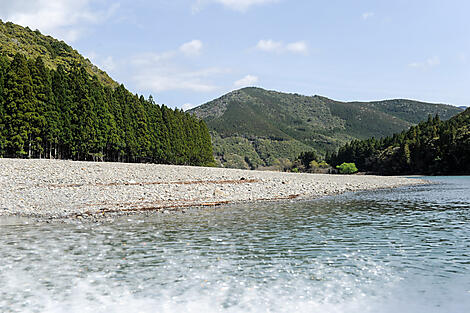
Day 3 - Shingu
To the south-west of the Japanese archipelago, Shingu is a port town in the Kansai region. Founded in 1933, it belongs to the peninsula of Kii, the countryï¾s largest. Take a trip around the Kumano Sanzan religious complex dedicated to three sacred mountains and home to two Shinto temples, Kumano Hong? Taisha and Kumano Hayatama Taisha.ï¾ The latter features the famous sacred nagi tree, said to have been planted around 1159. Pilgrims flock to these two sanctuaries that feature on UNESCO's World Heritage list. Hop on a boat and journey to the Dorokyo Gorge, a natural beauty spot carved out by the emerald waters of the Kumano river.
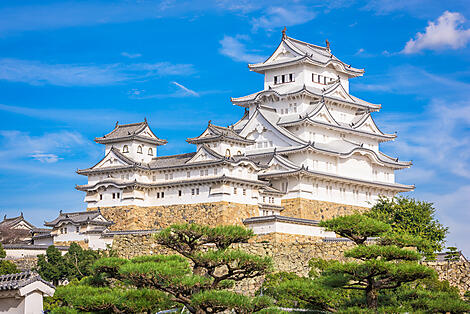
Day 4 - Himeji
You may get the impression that youï¾ve already seen Himeji Castle, as it has been featured many times on the big screen. The feudal edifice seems to spread its wings over the town like a white heron ï¾ï¾ in fact, its nickname is ï¾the castle of the white heronï¾. Originally started in the 15th century and then rebuilt in the 17 th-century, it is a UNESCO World Heritage site. At its feet lies the gorgeous Koko-en garden, which has nine different gardens designed to flourish in each of the four seasons.
Day 5 - Takamatsu
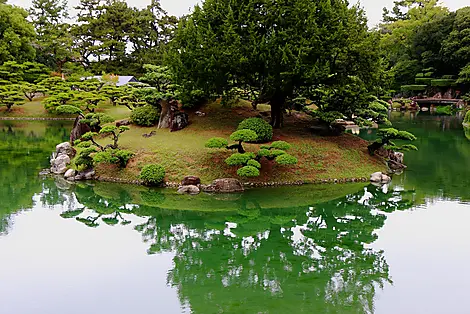
A former fortified city, ruled over by the Matsudaira clan from the Tamamo castle with its seawater moats, the city is home to one of the most beautiful classic gardens in Japan, the Ritsurin. It was created by the barons of the city at the start of the Edo period, during which time gardening became a profession in its own right. Its landscape incorporates Mount Shiun in the background, an example of what is known as the shakkei technique, which uses the surrounding landscapes to increase the beauty of the gardens.
Day 6 - Itozaki
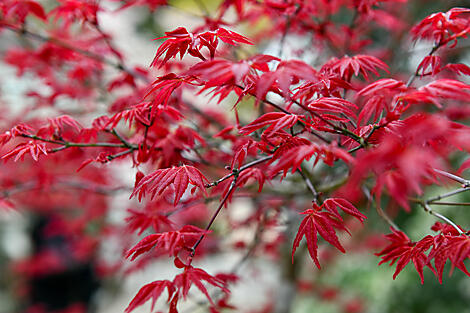
Jewels of the heart of Hiroshima Prefecture, Itozaki invites travelers to a timeless escape. Bordered by the Seto Inland Sea, it captivates with its landscapes blending the gentle shimmer of its waters and the silent majesty of its mountains. Itozaki is a journey into the soul of Japan, a haven where time stands still. The Japanese city will serve as the starting point for discovering, just a short distance away, the historic Onomichi, renowned for its nearly twenty temples and shrines.
Day 7 - Miyajima Island
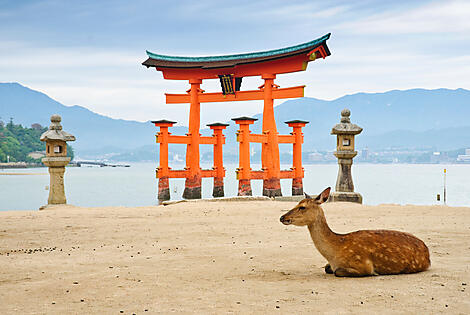
At the heart of the Inland Sea, Miyajima, the âisland sanctuaryâ will reveal its treasures. In the background you will see the Shinto Grand Sanctuary, whose entrance is guarded by a magnificent vermillion âToriiâ. Considered to be one of the most beautiful sites in the Japanese islands, you will be transported by the unique character and the serenity of this sacred site.
Day 7 - Hiroshima
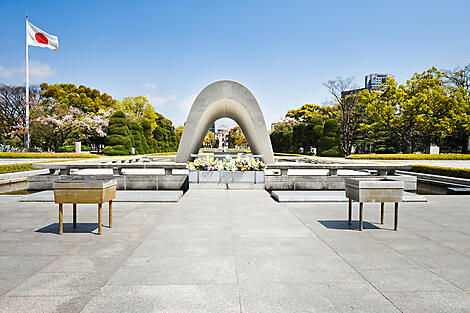
Visiting Hiroshima is a moving experience. The town spreads along Honshu Island, along the inside coasts of Seto. While firmly focused on the future, Hiroshima doesn't forget its past, and a visit to the Peace Memorial Park and Genbaku Dome is a must. You'll enjoy the city's modern, cosmopolitan atmosphere and effervescent nightlife just as much as the peaceful stillness of its natural parkland areas such as splendid Shukkei-en, the town's historic garden.
Day 8 - Beppu, Oita
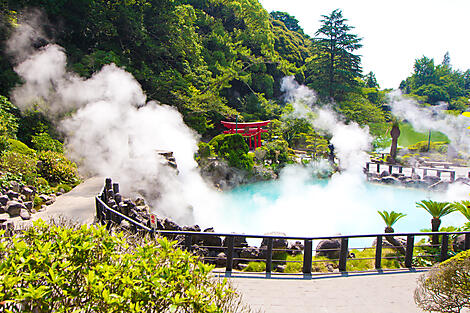
A favourite destination for the Japanese, Beppu is now famous throughout the Japanese archipelago thanks to its onsen â volcanic hot springs in which people immerse themselves to relax with family or friends. From Beppu, you will set off to discover a lush, peaceful valley in which sit 60 majestic stone Buddhas carved out of the cliff face between the 12th and 14th centuries. Exuding a soothing air of serenity, the Mangetsuji site seems to have drifted off to sleep in the heart of a dense bamboo forest surrounded by rice fields. Recognised as a National Treasure of Japan, this set of sacred sculptures offers travellers a unique, wonderful experience.
Day 9 - Miyazaki
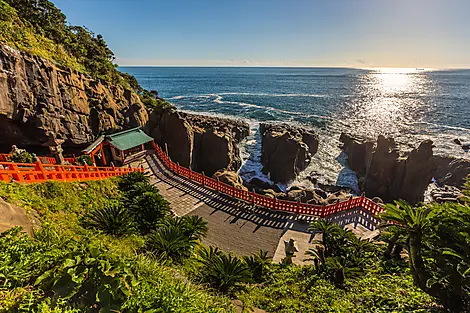
The cradle of Japanese mythology, Miyazaki is a hidden treasure on the southern coast of KyÅ«shÅ«. Known for its climate, its golden beaches and its spectacular rocky formations, it is an invitation to exploration and contemplation. In the heart of the city, the Miyazaki-jingÅ« Shinto shrine stands majestically, surrounded by ancient forests and peaceful gardens, in which an atmosphere of serenity reigns. Make the most of the authenticity of this city with fascinating local culture and, during the visit of the Miyazaki Shrine, fall under the spell of the kagura, a dance and song performance by the shrineâs priests and helpers.
Day 10 - Kagoshima
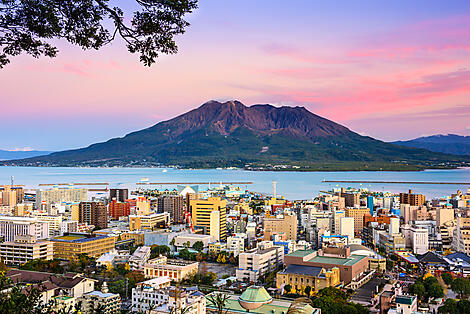
The seaside city of Kagoshima, at the south of Kyushu Island, ï¾ is best known for Sakurajima, an active volcano that faces Kinko Bay. A visit to this busy metropolis will remind you just how much the volcano is part of the inhabitants' everyday life: in the wake of the almost daily eruptions, a delicate layer of ash settles on everything. The top of a buried torii (traditional Japanese gate) measuring three metres that was 'swallowed up' by a giant lava flow in 1914 can still be seen. The power of nature will send a shiver down your spine.
Day 11 - Nagasaki
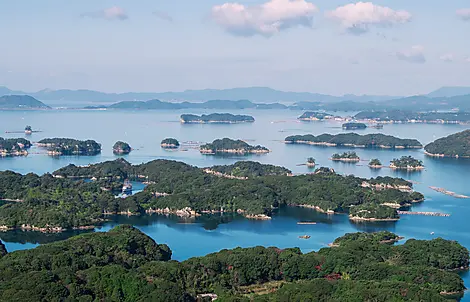
Located on the north-west coast of Kyushu, Nagasaki will impress you by its rich heritage. Despite the destruction in 1945, you can visit several ancient sites, including the beautiful 19 th-century Catholic Church of Oura and its garden, the sanctuary of Suwa Shrine or several Buddhist temples. A visit to the Atomic Bomb Museum gives you insight into the extent of the damage caused by the nuclear attack. Close by, a walk in the Memorial Peace Park leads you to a collection of objets d'art offered as a gift from Japan to the world.
Day 12 - Karatsu
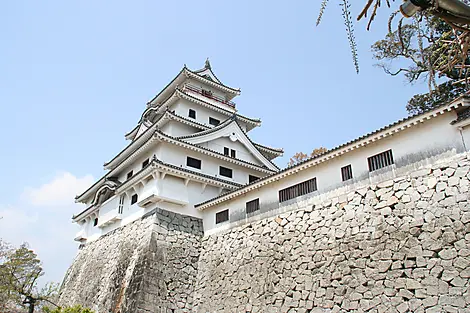
Karatsu Bay is edged with long sandy beaches and a huge pine forest that was planted over 350 years ago to protect the coast from the winds and tides of the Genkai Sea. From the top of the donjon of Karatsu Castle or Mount Kagami, you will be able to admire magnificent panoramas. In the north of the Higashi-Matsuura Peninsula, the waves have eroded the lava plateau and carved a magnificent natural site, the seven Nanatsugama Caves, out of the basalt. The city of Karatsu is famous for the quality of its pottery, which is influenced by the craftsmanship of nearby Korea. Very fine pieces are displayed in the cityâs galleries and at Karatsu Castle, alongside magnificent samurai armour
Day 13 - Busan
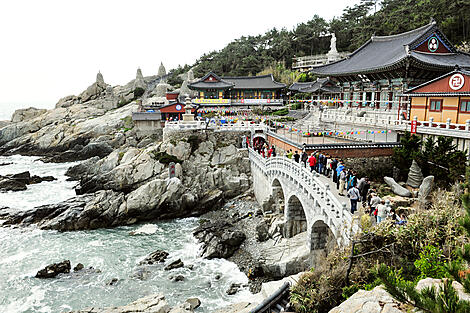
ith around four million inhabitants, Busan is the second largest metropolis on South Korea, after Seoul. This dynamic harbour city, located in the south-east, surrounded by the warm waters of the Sea of Japan, benefits from a mild, pleasant climate. Youâll find delightful simply to stroll around the lively streets and explore the cityâs outstanding cultural heritage of art galleries, museums, and Buddhist sites, such as the Haedong Yonggungsa temple, which elegantly sits on the waterfront. Rich too in magnificent beaches and superlative natural landscapes, Busanâs peaceful atmosphere will win you over, as will its inhabitants, whom youâll have the pleasure of meeting.
Tropical Indonesian Odyssey
Cruise Line: Ponant Cruises
Ship: Le Soleal
Sailing Dates: Jun 17 2026
Port: Benoa, Bali to Darwin
( Note: Optional tours are available from most ports for an additional charge. )
Tropical Indonesian Odyssey
Day 1 - Benoa, Bali
If it's a taste of exotic authenticity you're after, prepare to be spell-bound by the island of Bali, tucked away in the heart of the Indonesian archipelago. The beauty and diversity of its landscapes, the depth and richness of its cultural heritage and the plethora of activities on offer here make Bali a little slice of heaven on Earth. The island's southern coast enthrals with its white sand beaches, its picturesque little fishing villages such as Benoa, and its hills patchworked with terraced rice paddies further inland. Nicknamed 'the Island of Gods' for its sumptuous temples, Bali is the beating heart of Indonesian Hinduism.
Day 2 - Badas, Sumbawa
The port of Badas is part of the greater township of Sumbawa Besar, on the island of Sumbawa. Like most of Sumbawa the people hold their culture strong as a major part of their identity. The island has a strong influence from the Makassarese of Sulawesi, who over the centuries have introduced a lot of their culture into Sumbawa. Join your expedition team and local guides for a tour by bus to Pamulung Village where you will be welcomed by the head of the village and have the opportunity to witness first-hand the local traditions of rice pounding, weaving and also witness a wedding procession. Your visit will conclude with an exciting Sumbawa buffalo race, an event that will be held in honour of our visit. Â
Day 3-4 - Komodo National Park
Between the islands of Sumbawa and Florès, Komodo National Park welcomes you to discover its natural wonders. At the very heart of the Indonesian archipelago, the three islands that form it â Komodo, Rinca and Padar - owe their renown to the famous eponymous dragons, enormous lizards over two metres long, which live in its grassy savannah. This jagged and hilly volcanic territory belonging to the Sunda Islands is a UNESCO World Heritage Site because of its incredible terrestrial and marine biodiversity. Admire its palette of colours, intermingling the sparkling whites of the beaches, the deep blues of the coral-filled water and the soft greens of its pastures.
Day 5 - Maumere, Flores
Floresians have an ancient culture stretching back millennia before the first arrival of Europeans in search of trade opportunities. Their history is shared through oral traditions and is recreated in song and dance. The mountainous terrain of Flores has preserved the diversity of cultures and Maumere serves as the capital of the Sikka district and main trading port. Few tourists make it to Maumere with most stopping at Labuan Bajo and heading west to the islands of Komodo. Consequently, Maumere and has kept its charming atmosphere, an eclectic mix of a bustling trading town and a coastal paradise. Join your expedition team and local guides for a tour by local transport to the markets and tribal villages in the hinterland of Maumere.
Day 6 - Kalabahi, Alor
The unique culture of the Alorese continues among the Takpala indigenous group who have preserved their traditional architecture and ceremonies. The island of Alor is also known as the island of a Thousand Mokoâs. The Moko is a small bronze kettledrum which is believed to have originated from the Dong Son culture of Vietnam. However, it remains a mystery as to how these prehistoric Dong Son drums arrived in Alor. Local legend says that the Mokoâs were discovered buried in the ground, and indeed mokos are still being uncovered today. Join the expedition team and local guides for a tour by local transport to Takpala village, the Museum of a Thousand Mokos and the thriving main market of Kalabahi.
Day 7 - Barat Daya Islands
If you are looking for exoticism and authenticity, then you will be captivated by the Barat Daya Islands, an Indonesian archipelago lying to the east of the Lesser Sunda Islands, bathed by the Banda Sea and surrounded by coral reefs. With their fine sandy beaches, marine environments, preserved nature and paddy fields, these islands in the Maluku archipelago are a real concentration of the beauty South-East Asia has to offer. A lush environment in which fauna and flora flourish. Notably, there are almost 162 different bird species including four endemic ones and three endangered ones.
Day 8 - Banda Neira, Maluku Islands
From age-old traditional cultures and ancient vestiges, to coral reefs and lush green jungle⦠The attractions of the remote Banda archipelago seem endless. Better known as the legendary âSpice Islandsâ of the Ancient World, these small volcanic landmasses were the fabled prize of colonial powers for more than four centuries. Every colonial power of significance fought for control of these ten small islands that today have become largely forgotten. Walking the streets of Banda Neira is a surreal experience as your eyes are drawn to the eclectic mix of Portuguese, Dutch and British architecture, the remnants of a rich and tumultuous history. It is without doubt the most historically significant and interesting of all the âSpice Islandsâ.
Day 9 - Kitikiti Waterfall, Mommon
North of Triton Bay, in the Indonesian province of West Papua, lie the Bomberai Peninsula and Sebakor Bay. A real paradise for divers, this protected, authentic and very wild area boasts an exceptional biodiversity. Here, you will be able to admire the superb Kitikiti Waterfall where you could enjoy a swim or snorkel surrounded by lush nature, both on land and under water.
Day 10 - Triton Bay, West Papua
Triton Bay is one of three regions in Indonesiaâs West Papua province that comprise the Birdâs Head Seascape (the other two are Raja Ampat and Cenderawasih Bay), which is now considered by marine biologists to be the epicentre of the Coral Triangle. It contains more fish and coral species than anywhere else on the planet. Its unparalleled marine biodiversity and endemism, habitat richness, and relatively intact nature of its ecosystems are unique. Join your expedition team for a zodiac voyage through the spectacular rainforest capped karst islands. Later in the day enjoy the opportunity to explore the richness of the underwater realm.
Day 11 - Kei Islands, Maluku Islands
The Kei Islands are blessed with kilometres of stunning, yet almost entirely empty, white-sand beaches and a deeply hospitable population. Beneath the mostly Christian facade, Kei culture is fascinatingly distinctive. Local history holds that ancestors of contemporary Kei islanders came from Bali, part of the expanding Hindu Majapahit kingdom from the western archipelago. Enjoy a day of swimming and snorkelling on an idyllic uninhabited picture postcard tropical island.
Day 12 - At sea
During your journey at sea, make the most of the many services and activities on board. Treat yourself to a moment of relaxation in the spa or stay in shape in the fitness centre. Depending on the season, let yourself be tempted by the swimming pool or a spot of sunbathing. This journey without a port of call will also be an opportunity to enjoy the conferences or shows proposed on board, depending on the activities offered, or to do some shopping in the boutique or to meet the PONANT photographers in their dedicated space. As for lovers of the open sea, they will be able to visit the shipâs upper deck to admire the spectacle of the waves and perhaps be lucky enough to observe marine species. A truly enchanted interlude, combining comfort, rest and entertainment.
Day 13 - Darwin
Darwin is located in Australiaâs Northern Territory which is also known as the âTop Endâ. It is the capital city and the most populated town of the Northern Territory. Darwin is a beautiful tropical city, a melting pot of people and cultures, over 50Â different cultures live and work side by side that prides itself in its unique and friendly laid-back lifestyle. Come discover the townâs still recent history through its emblematic buildings such as the new Parliamant House opened in 1994, a magnificent example of tropical architecture or Admiralty House declared heritage place, a tropical-style home elevated on stilts that has survived two cyclones and numerous air raids.
*Prices are per person, based on double occupancy. Prices do not include Government Fees & Taxes. Pricing and availability subject to change without notice. STIC Travels Private Limited reserves the right to refuse or honor any prices / sailings that are erroneously printed or quoted. Terms & Conditions apply.

Contact
2nd Floor, Tower 'C', Cyber Greens, DLF Phase-III, Gurgaon,Haryana - 122002Phone: +91-124-4595300Fax: +91-124-4114196E-mail: info@sticgroup.com
We Accept:

Secured By: 
Copyright © STIC GSA Services Pvt. Ltd. All rights reserved