

Three Continents Explorer - from Athens - 14 Nights

Cruise Line: Celestyal Cruises
Ship: Celestyal Journey
Sailing Dates: Dec 04 2027 | Dec 18 2027
Port: Athens | Day at sea | Alexandria | Limassol | Rhodes | Day at sea | Istanbul | Thessaloniki | Volos | Kusadasi | Heraklion | Athens
( Note: Optional tours are available from most ports for an additional charge. )

Three Continents Explorer - from Athens - 14 Nights
Day 1
.jpg) Athens (Greece), Depart 17:00
Athens (Greece), Depart 17:00
Your vacation begins in the majestic city of Athens. As one of the oldest cities in the world, the vibrant modern metropolis boasts an intriguing and contrasting mix of old and modern architecture in perfect harmony and balance. Explore the city and soak up the atmosphere by the harbourâs edge as you wait to embark for your exciting adventure.
Day 2
 Day at sea
A day at sea gives you the opportunity to explore the shipâs array of amenities, take full advantage of the onboard activities and indulge in our chefâs exquisite cuisine. Kick back and soak up the sun as we treat you to drinks from the bar. Alternatively, why not participate in handicrafts, language lessons, traditional dancing, games or exercise. Thereâs plenty to do.
Day 3-4
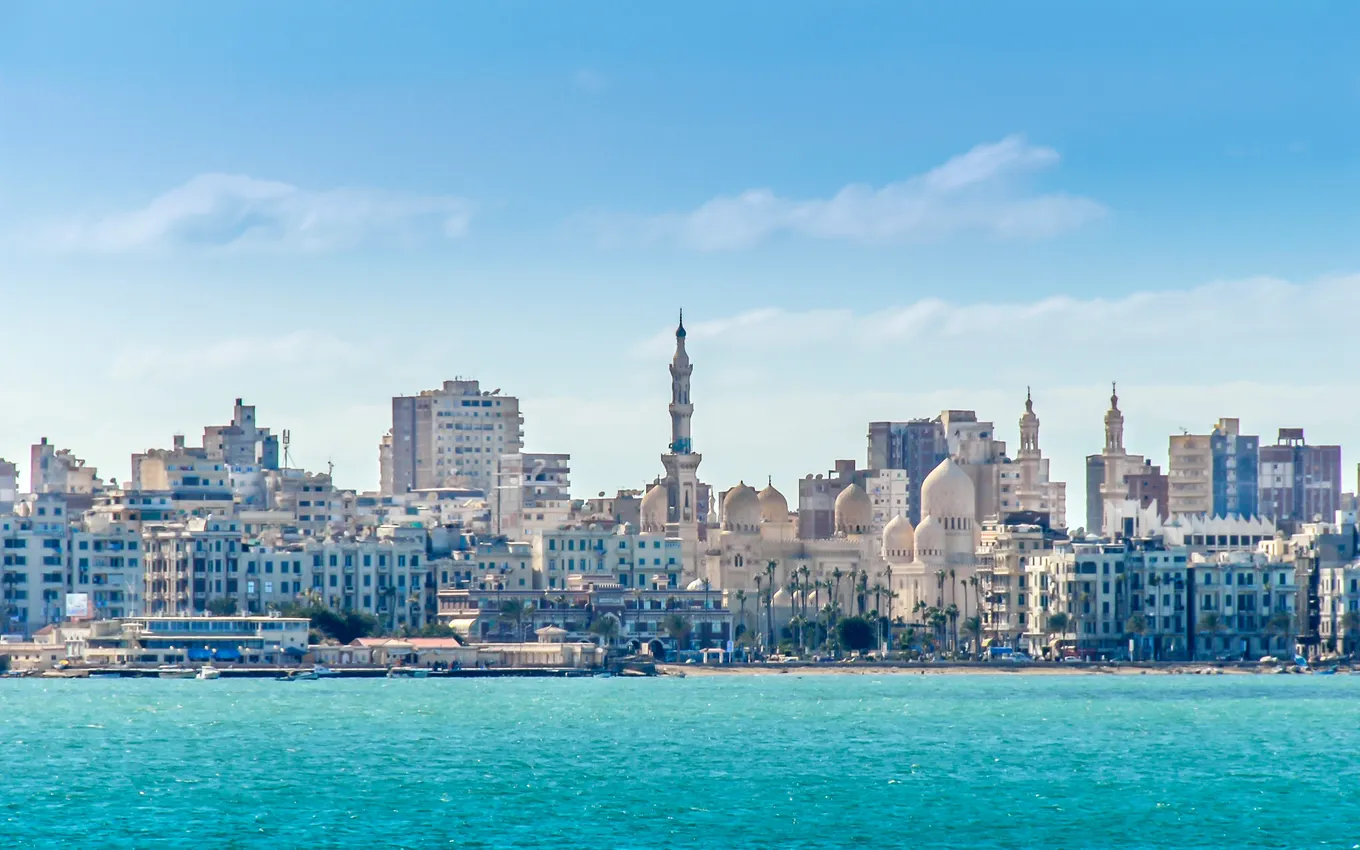 Alexandria, Arrive 07:00 | Depart 13:00
Alexandria looks outward to the sea and back through thousands of years of history. Its waterfront, neighbourhoods and cultural landmarks reveal a city shaped by Greek, Egyptian and wider Mediterranean influences. An overnight stay creates time to experience more than a single daytime visit, from the Corniche and cafés to the stories that have made Alexandria one of the regionâs great crossroads.
Day 5
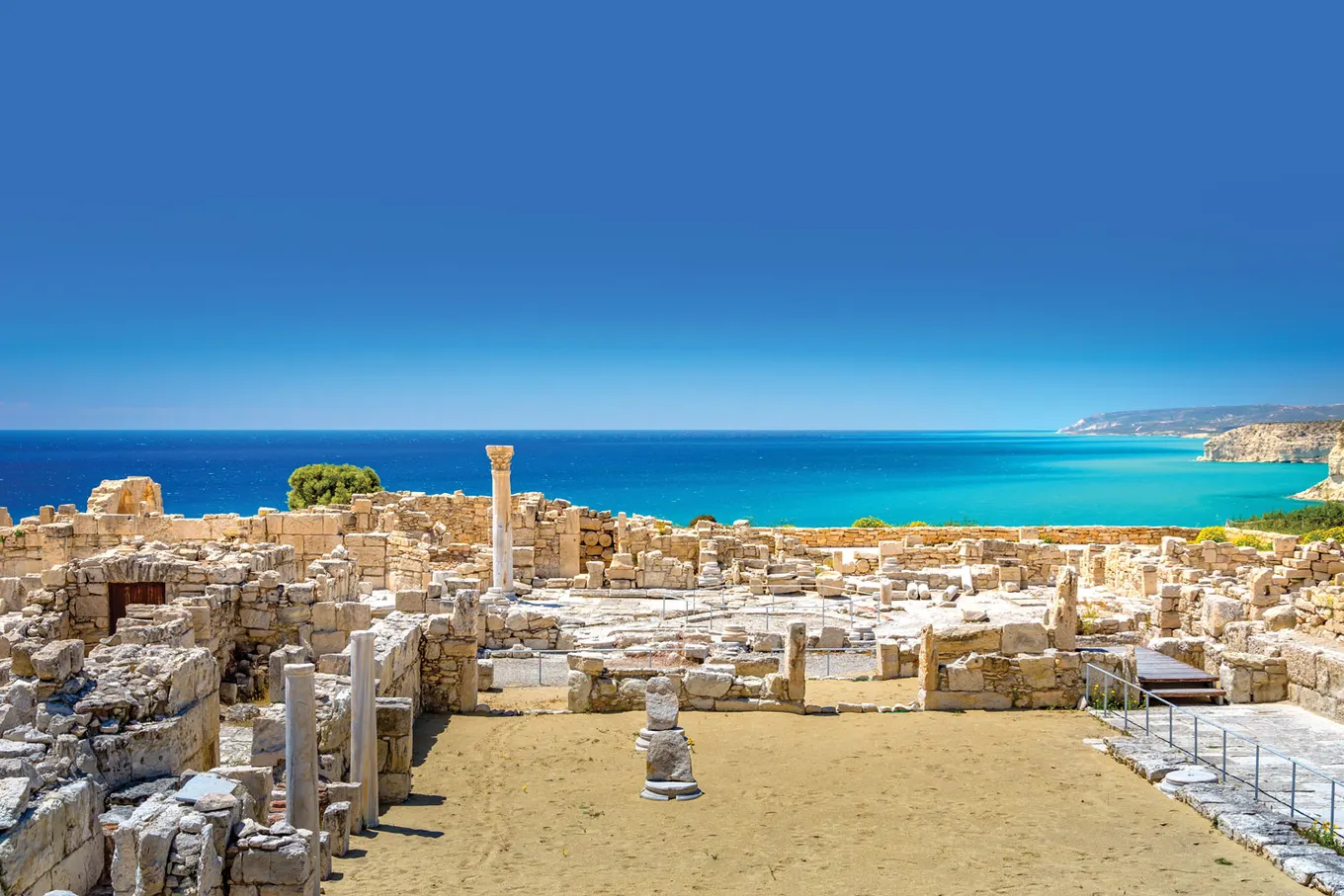 Limassol, Arrive 08:00 | Depart 18:00
Welcome to the bustling, cosmopolitan hub of Limassol. The streets here are lined with colourful cafes, bars and restaurants for you to enjoy. Complementing the modern attractions, this lively city also has the historic Limassol Castle and a collection of ancient treasures on show in the Cyprus Medieval Museum. Make sure to explore the UNESCO-listed archaeological site of Pafos, and the legend of Aphroditeâs Rock before you head on to your next stop.
Day 6
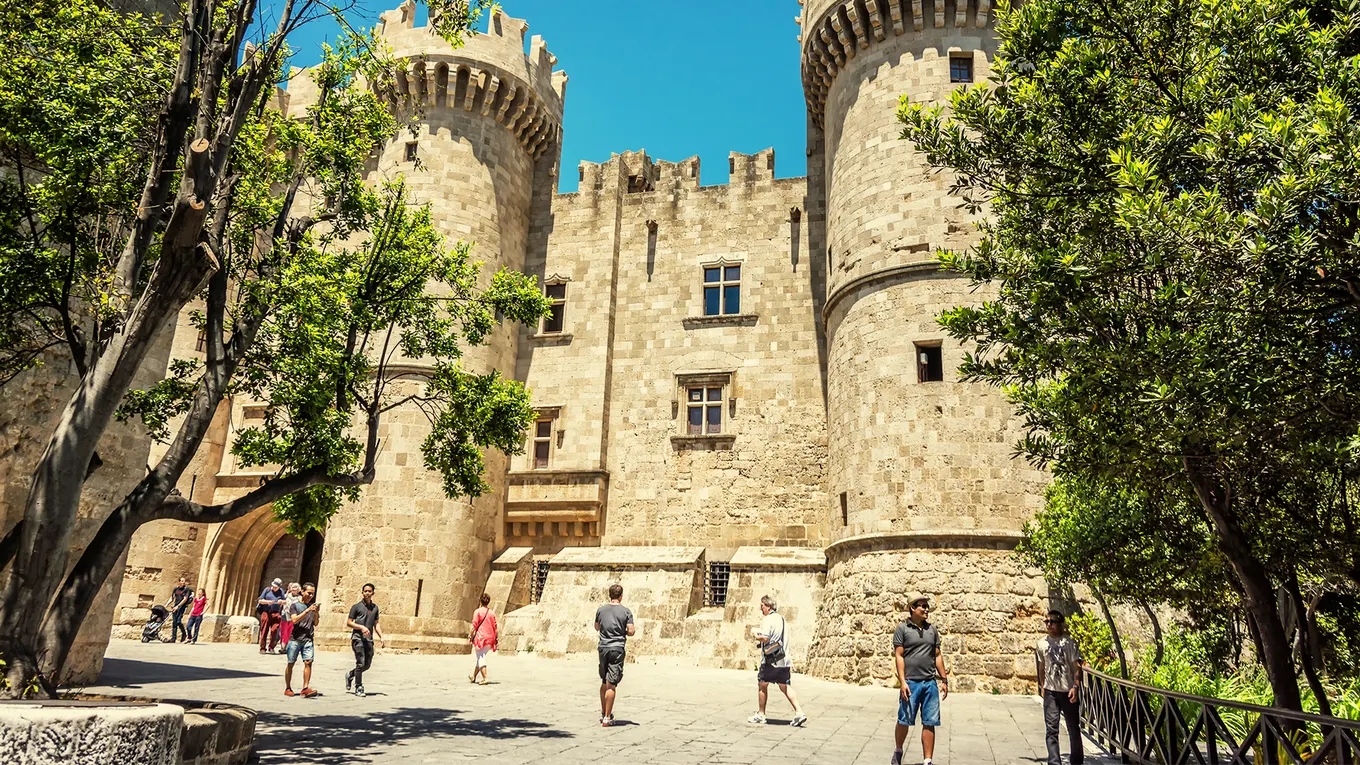 Rhodes, Arrive 08:00 | Depart 22:00
The stunning landscape of Greece's largest Dodecanese island, Rhodes, seamlessly incorporates dramatic ancient and historic sites with charming modern hillside villages. Here, you can book an excursion to visit the majestic medieval fortification of the Acropolis at Lindos, perched on the clifftop above the crystalline Aegean. Take time to explore the cobbled alleyways and narrow arteries in the Old Town, where you will discover opulent architecture with Ottoman and Italian influence.
Day 7
Day at sea
A day at sea gives you the opportunity to explore the shipâs array of amenities, take full advantage of the onboard activities and indulge in our chefâs exquisite cuisine. Kick back and soak up the sun as we treat you to drinks from the bar. Alternatively, why not participate in handicrafts, language lessons, traditional dancing, games or exercise. Thereâs plenty to do.
Day 8-9
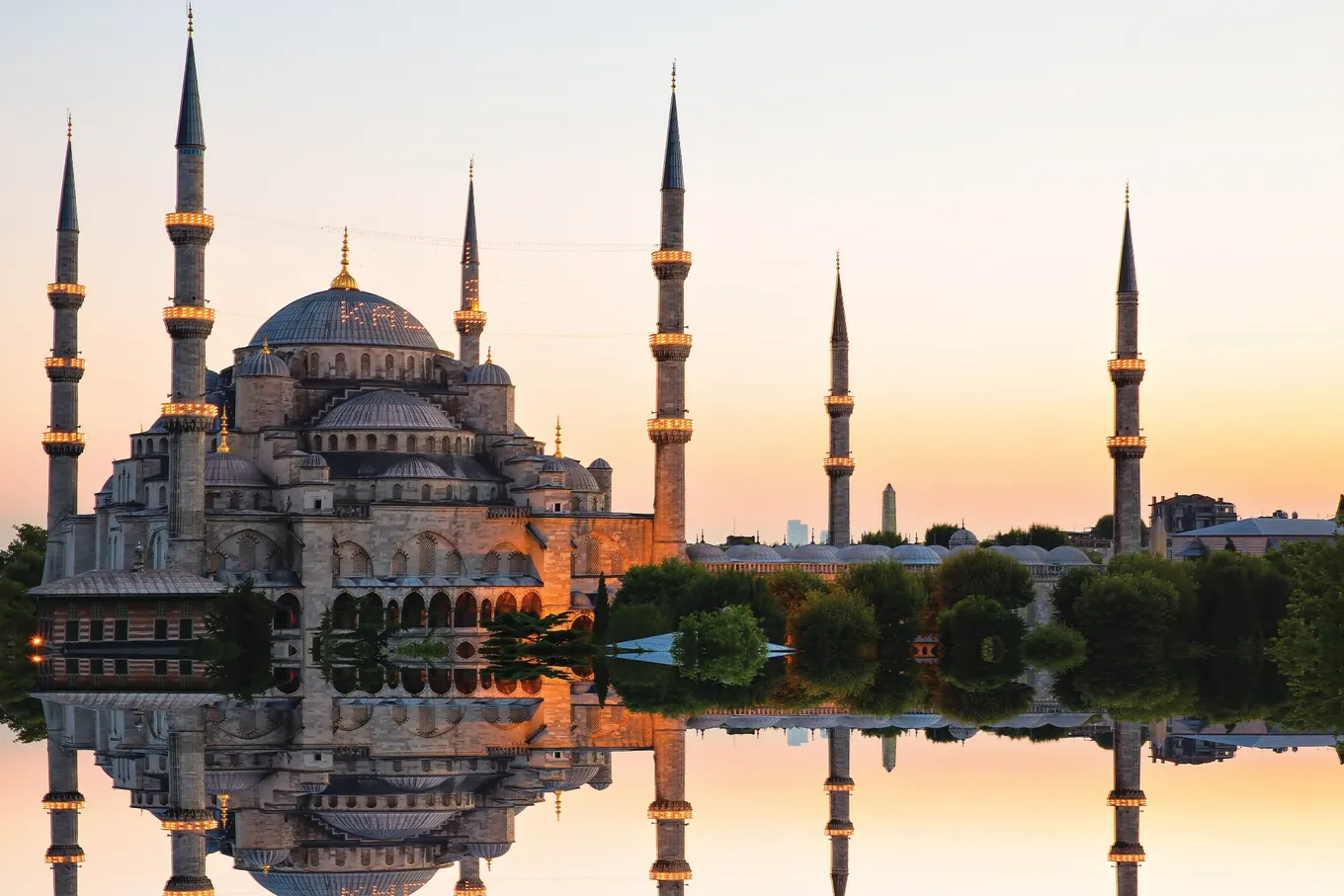 Istanbul, Arrive 08:00 | Depart 12:00
From the crossroads of the world to the Aegean. Explore the cultural hotspot of Istanbul by sailing down the Bosphorus Strait on a private boat, where youâll catch heartstopping views of the Topkapi Palace and Rumeli Hisari Fortress. Set your senses ablaze by a wander through a historic spice market before you set sail for the Aegean.
Day 10
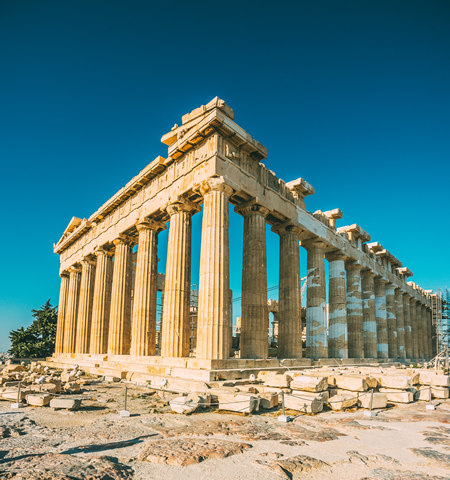 Thessaloniki, Arrive 10:30 | Depart 21:00
Thessalonikiâs ancient ruins rooted in the heart of the city create a unique tapestry of roman agora and byzantine baths, and with iconic landmarks such as the Rotonda and the Arch of Galerius nearby, this is a perfect midpoint of your cruise. Stock up on the famous treats and pastries, before you head on to your next leg.
Day 11
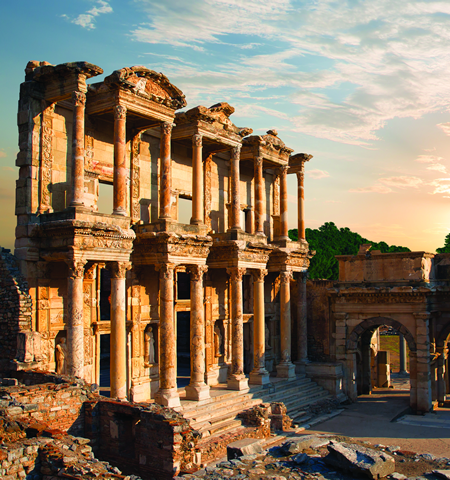 Volos, Arrive 08:00 | Depart 18:00
Volos itself offers everything you need for an exciting or relaxing day in port. Step off your Volos cruise, and youâre greeted by a thriving university city whose energetic pace will whisk you up into its whirlwind of activity, along the edge of the beautiful natural harbor and in the tsipouradikaâtraditional tavernasâand set you on course to uncover some real architectural gems, both ancient and neoclassical. Wander around and youâll find grand urban mansions sitting beside nods to the cityâs long-lasting industrial heritage.
Day 12
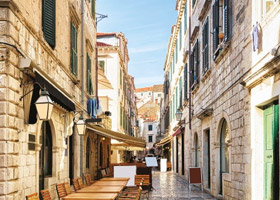 Kusadasi, Arrive 09:30 | Depart 17:00
The dynamic beach resort of Kusadasi welcomes you with its warm and friendly ambience. Book a once-in-a-lifetime excursion and be whisked away for a guided tour round ancient Ephesus, one of the highlights of this iconic Aegean experience. Before reboarding the ship, take time to enjoy the scenic seafront promenade and the townâs impressive Grand Bazaar.
Day 13
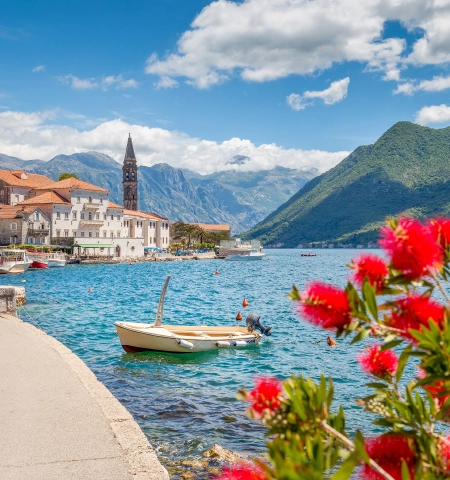 Heraklion, Arrive 08:00 | Depart 18:00
As you're making memories on your Greek cruise, weâre pulling into Heraklion. Donât be fooled by the imposing 16th-century walls of Koules Fortress - Heraklion is a charming Aegean paradise. The next leg of your cruise awaits - but not before youâve taken in the seafront and explored the rolling Cretan countryside. Get to know about Europeâs first civilisation in the Knossos museum before heading on for the next leg of your journey.
Day 14-15
Athens (Greece), Arrival 07:00
Although your cruise is coming to an end, you will still have time to discover the charm of the wonderful city of Athens. Lose yourself in the city's narrow streets, teeming with life and culture. Or climb up to the Acropolis for a unique view of this dazzling, cosmopolitan city. Watch the night sky over Athens after sunset and enjoy the calm waters of the Aegean. It is the perfect place to end your cruise.
Mediterranean Mosaic - Turkey & Greece - 7 Nights

Cruise Line: Celestyal Cruises
Ship: Celestyal Journey
Sailing Dates: Dec 11 2027 | Dec 25 2027
Port: Istanbul | Thessaloniki | Volos | Kusadasi | Heraklion | Athens
( Note: Optional tours are available from most ports for an additional charge. )

Mediterranean Mosaic - Turkey & Greece - 7 Nights
Day 1-2
Istanbul, Arrival 08:00 | Depart 12:00
From the crossroads of the world to the Mediterranean to the East. Explore the cultural hotspot of Istanbul by sailing down the Bosphorus Strait on a private boat, where youâll catch heartstopping views of the Topkapi Palace and Rumeli Hisari Fortress.
Day 3
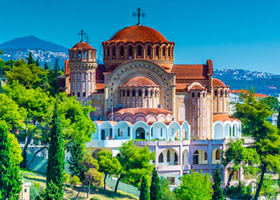 Thessaloniki, Arrival 10:30 | Depart 21:00
Thessalonikiâs ancient ruins rooted in the heart of the city create a unique tapestry of roman agora and byzantine baths, and with iconic landmarks such as the Rotonda and the Arch of Galerius nearby, this is a perfect midpoint of your cruise. Stock up on the famous treats and pastries, before you head on to your next leg.
Day 4
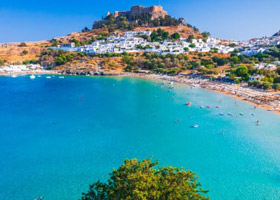 Volos, Arrive 08:00 | Depart 18:00
Volos itself offers everything you need for an exciting or relaxing day in port. Step off your Volos cruise, and youâre greeted by a thriving university city whose energetic pace will whisk you up into its whirlwind of activity, along the edge of the beautiful natural harbor and in the tsipouradikaâtraditional tavernasâand set you on course to uncover some real architectural gems, both ancient and neoclassical. Wander around and youâll find grand urban mansions sitting beside nods to the cityâs long-lasting industrial heritage.
Day 5
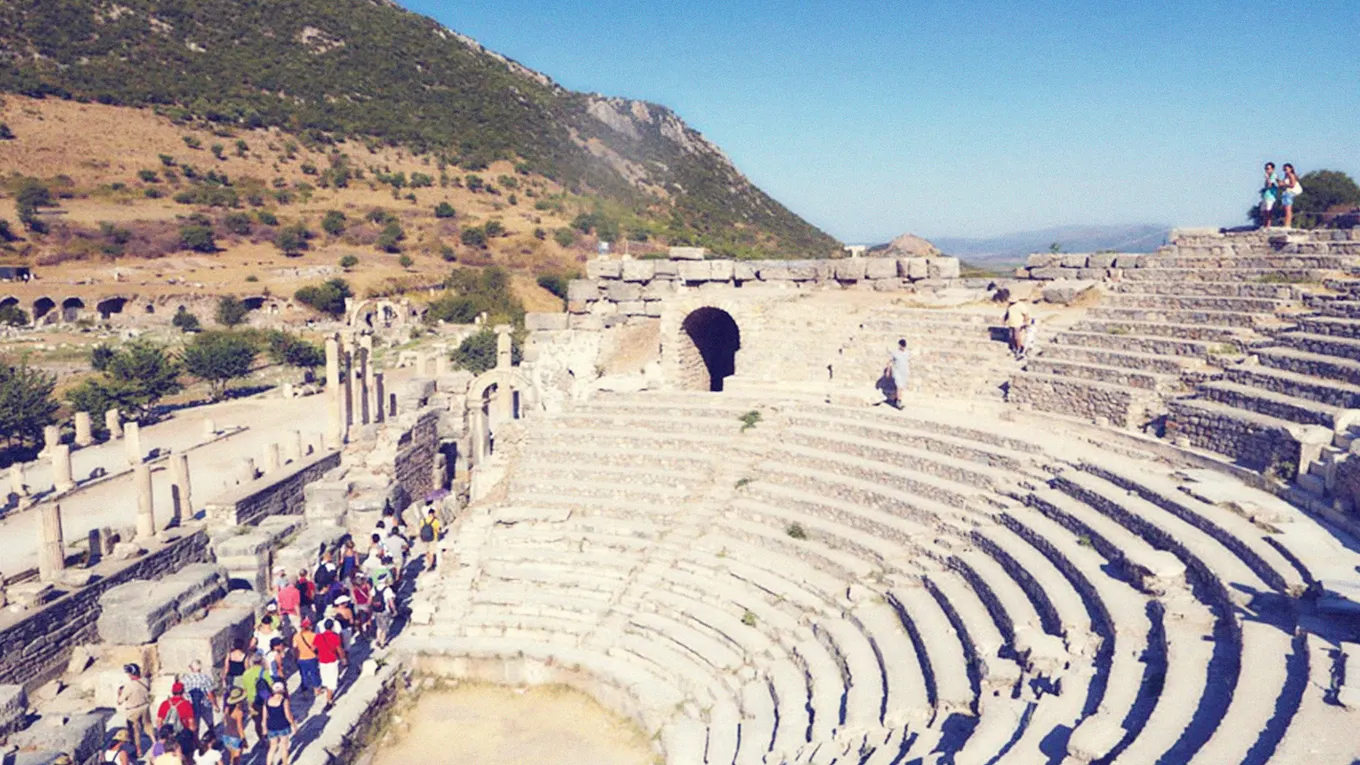 Kusadasi, Arrive 09:30 | Depart 17:00
The dynamic beach resort of Kusadasi welcomes you with its warm and friendly ambience. Book a once-in-a-lifetime excursion and be whisked away for a guided tour round ancient Ephesus, one of the highlights of this iconic Aegean experience. Before reboarding the ship, take time to enjoy the scenic seafront promenade and the townâs impressive Grand Bazaar.
Day 6
 Heraklion, Arrive 08:00 | Depart 18:00
As you're making memories on your Greek cruise, weâre pulling into Heraklion. Donât be fooled by the imposing 16th-century walls of Koules Fortress - Heraklion is a charming Aegean paradise. The next leg of your cruise awaits - but not before youâve taken in the seafront and explored the rolling Cretan countryside. Get to know about Europeâs first civilisation in the Knossos museum before heading on for the next leg of your journey.
Day 7-8
Athens, Arrival 07:30 | Depart 17:00
Although your cruise is coming to an end, you will still have time to discover the charm of the wonderful city of Athens. Lose yourself in the city's narrow streets, teeming with life and culture. Or climb up to the Acropolis for a unique view of this dazzling, cosmopolitan city. Watch the night sky over Athens after sunset and enjoy the calm waters of the Aegean. It is the perfect place to end your cruise.
Celebrating New Year's in Antarctica

Cruise Line: Polar Latitudes Expeditions
Ship: Ocean Albatros
Sailing Dates: Dec 27 2027
Port: Ushuaia to Ushuaia
( Note: Optional tours are available from most ports for an additional charge. )

Celebrating New Year's in Antarctica
Day 1
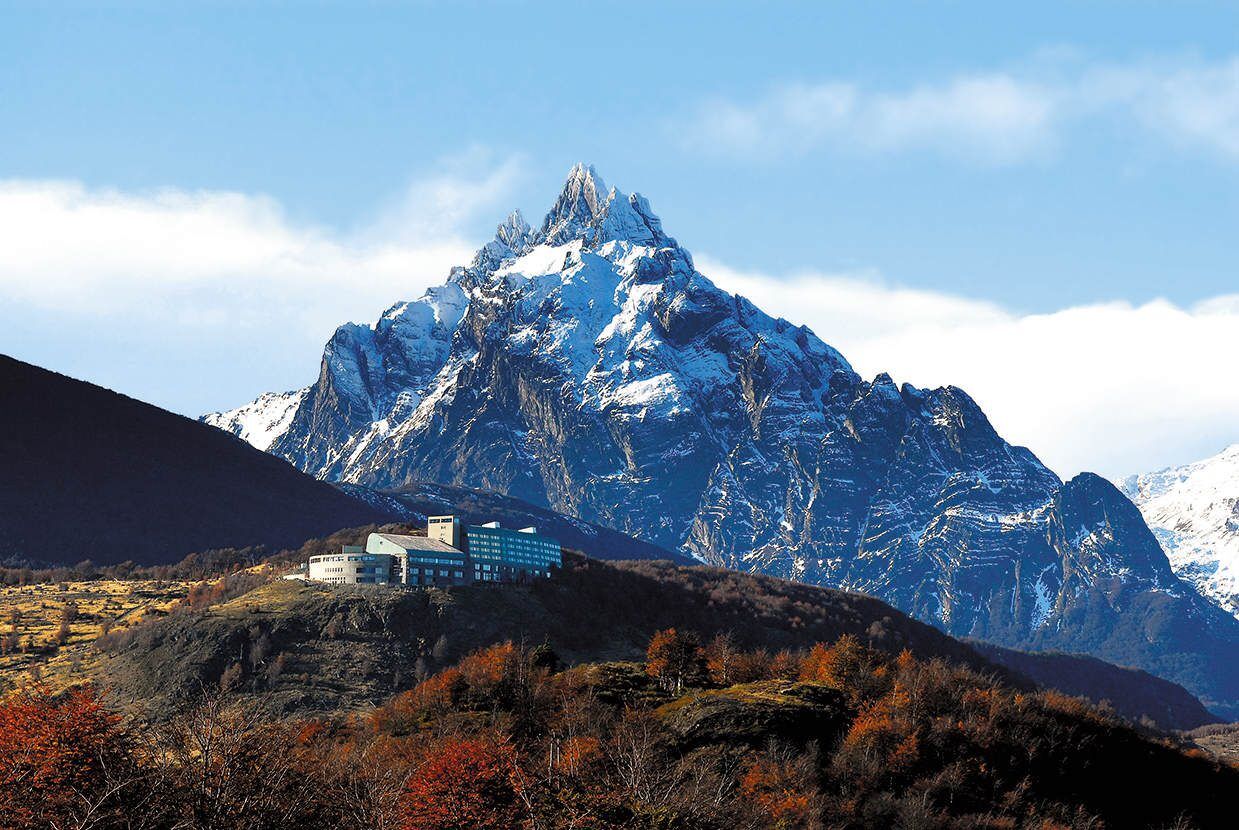 Arrive and explore in Ushuaia
After a friendly welcome at the airport and a transfer to the luxurious Arakur Ushuaia Resort & Spa, take some time to unwind or explore the southernmost city in the world, Ushuaia. (In the unlikely event that you can't be accommodated at the Arakur, you'll unwind at another of Ushuaia's top luxury hotels.)
Our optional evening briefing is your opportunity to ask questions and meet some of your fellow explorers.
Day 2
 All Aboard!
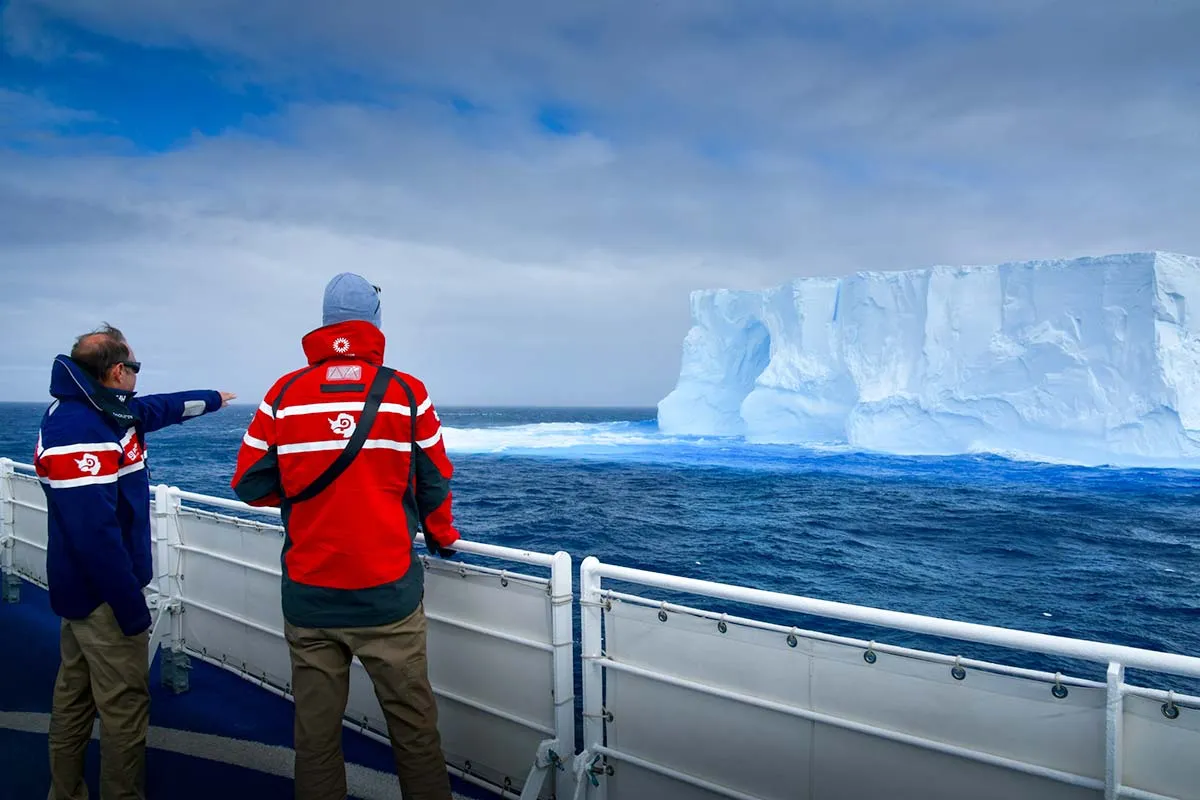
Spend your morning relaxing at the hotel, visiting a museum, or exploring the shops in Ushuaia, before our mid-afternoon escort to the ship. Our Expedition Team and ship staff will welcome you on board and get you settled in, followed by a safety and orientation briefing and our Captainâs welcome dinner. Weâre on our way to Antarctica!
Day 3-4
 Drake Passage
Join our Polar Experts as they share their vast knowledge of Antarctica, from its enchanting wildlife to its bold history. Participate in our pioneering Citizen Science program or sit back and take in this fabled journey while catching glimpses of rarely seen wildlife. Keep your binoculars handy to identify the many seabirds that escort our ship as we cross the Antarctic Convergence into Antarcticaâs waters and noticeably cooler temperatures.
Day 5
 Antarctic Sound and Weddell Sea
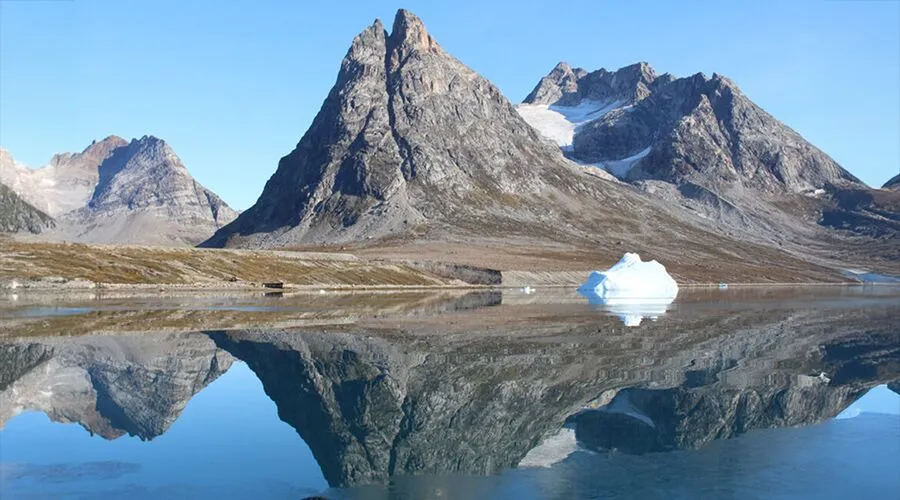
We maneuver through the mysterious channels and wildlife-rich waters of the Antarctic Sound and Weddell Sea, the perfect place to ensure an unforgettable holiday adventure. The Antarctic Sound is well known for its huge tabular icebergs, and the Weddell Sea offers a unique geography unlike anywhere else on earth. Here weâll take in the abundant wildlife such as Adélie penguins and seals as we keep on the lookout for hunting Orca.
Day 6-7
 Happy New Year, Antarctica!
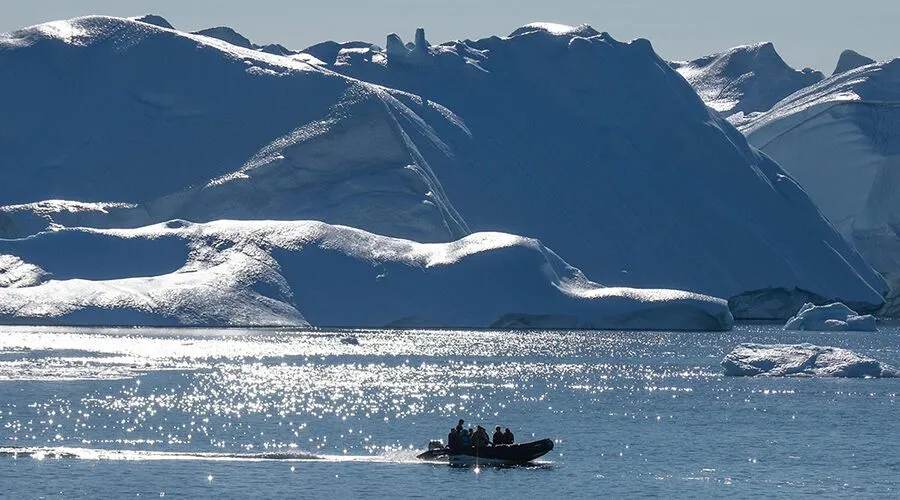
Time to put our explorerâs spirit to full use. Antarctica offers astounding landscapes and wildlife encounters at every turn, as the last truly unspoiled place on earth, populated only by its original wild inhabitants. Prepare yourself to encounter numerous species of penguins, seals, and whales, who will be there to share the holidays with us along the rugged coastlines and in the sea. Weâll also take full advantage of every opportunity to visit some of the several active scientific bases and historic landing sites on the peninsula. And as we cross over from 2026 to 2027, weâll raise a glass to the last truly wild place on the planet.
Day 8
South Shetland Islands
Over time, the volcanic activity of the South Shetland Islands has created a geology unlike any other. Here, you can expect a spectacular display of mountains, glaciers, and wildlife, including Chinstrap and Gentoo penguins, and itâs not uncommon to share the waterâs edge with Elephant and Fur seals. Whales are often spotted as well. So, weâll settle into our Zodiacs and spend most of our day exploring. And kayakers, itâs time to get your first taste of gliding just inches off the pristine Antarctic water. Whether on land or sea, in Zodiac or kayak, be prepared for a fully immersive introduction to this incomparable part of the world.
Day 9-10
 Drake Passage
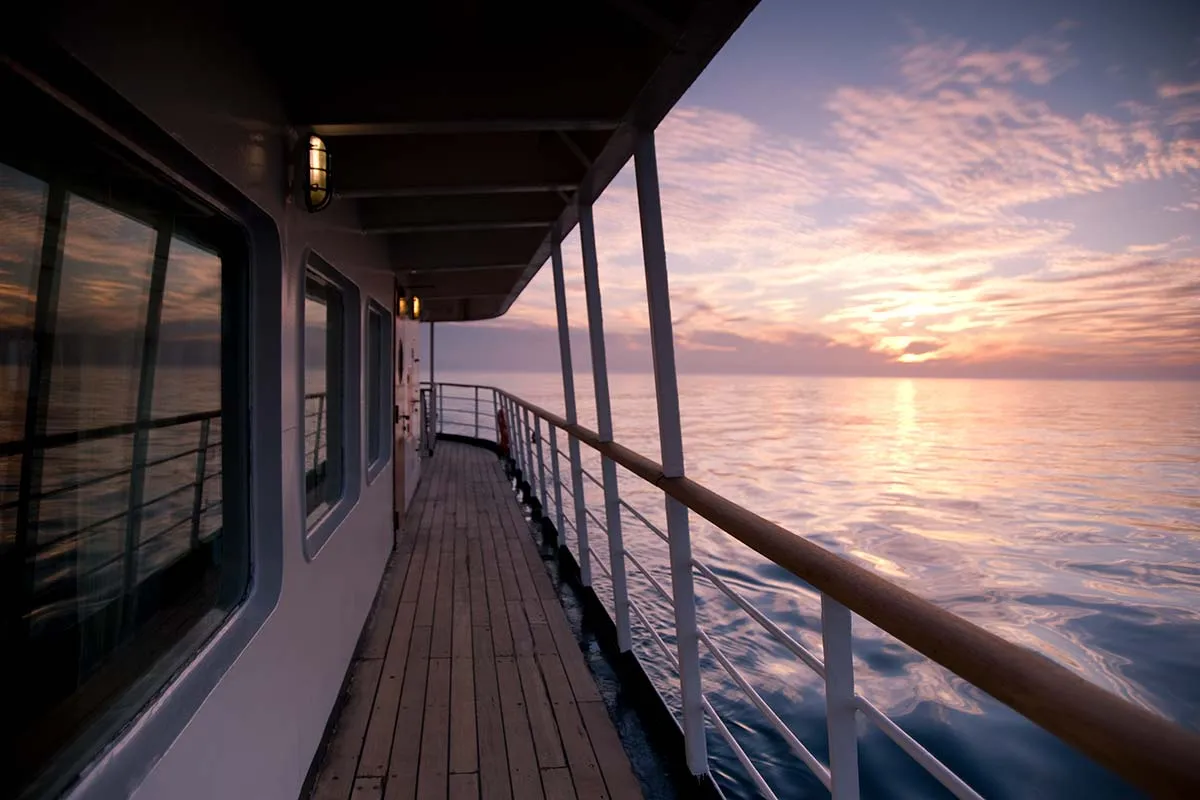
We leave this magical place and make our way north, once again heading across the Antarctic Convergence and the Drake Passage. We have one last hurrah as we celebrate the conclusion of our expedition with a special slideshow and a final meal together.
Day 11
Ushuaia Disembarkation
With huge smiles on weary, content faces, we disembark in the morning, letting you catch a flight to Buenos Aires or stay in Ushuaia for more sights and adventure.
Complete Antarctica: Sail In, Fly Out

Cruise Line: Polar Latitudes Expeditions
Ship: Nova
Sailing Dates: Jan 12 2028
Port: Ushuaia to Punta Arenas
( Note: Optional tours are available from most ports for an additional charge. )

Complete Antarctica: Sail In, Fly Out
Day 1
Arrive and Explore in Ushuaia
Arrive in Ushuaia, Argentina, check in, and relax at the Hotel Albatros, located in the heart of this fascinating Patagonian city. Ushuaia is the main hub for global visitors to Antarctica, situated on the Beagle Channel at the edge of the infamous Drake Passage. Meet your fellow explorers and prepare yourself for adventure!
Day 2
All Aboard in Ushuaia!
Spend your morning relaxing at the hotel, visiting a museum, or exploring the shops in Ushuaia, before our mid-afternoon escort to the ship. Our Expedition Team and ship staff will welcome you on board and get you settled in, followed by a safety and orientation briefing and our Captainâs welcome dinner. Weâre on our way to Antarctica!
Day 3-4
Drake Passage
Join our Polar Experts as they share their vast knowledge of Antarctica, from its enchanting wildlife to its bold history. Participate in our pioneering Citizen Science program or sit back and take in this fabled journey while catching glimpses of rarely seen wildlife. Keep your binoculars handy to identify the many seabirds that escort our ship as we cross the Antarctic Convergence into Antarcticaâs waters and noticeably cooler temperatures.
Day 5-7
Immersive Antarctica
Itâs time to slow our ship down, allowing you to fully explore the dreamlike world around us and let the power of this extraordinary place sink in. This is your opportunity to become more intimately acquainted with Antarctica by Zodiac, kayak, snowshoe, or while spending unhurried time ashore, taking in the silence and scale of the landscape. For those engaged in our Citizen Science program, the important work of understanding and documenting this fragile environment continues. Be sure to keep your camera handy, as penguins, seals, and whale sightings are all part of this incredible experience. And a passing iceberg, towering high above, its magical blue light seeming to glow from within, is something youâll want to share with friends back home.
Day 8
South Shetland Islands
Over time, the volcanic activity of the South Shetland Islands has created a geology unlike any other. Here, you can expect a spectacular display of mountains, glaciers, and wildlife, including Chinstrap and Gentoo penguins. Itâs also not uncommon to share the waterâs edge with elephant and fur seals, while whales are often spotted as well. Weâll settle into our Zodiacs and spend our final day exploring Antarctica.
Day 9
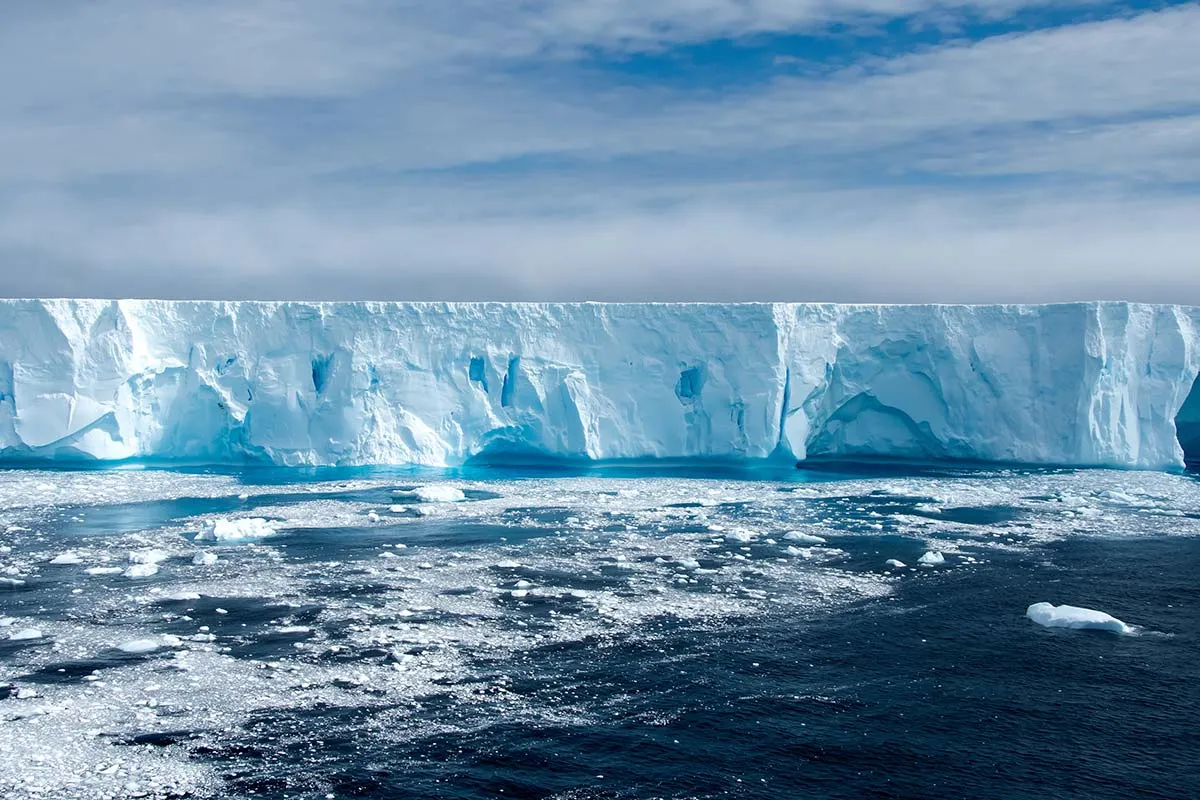 King George Island â Disembarkation
On the final day aboard Ocean Nova, we arrive at King George Island, Antarcticaâs most populous island (scientists only, please). After a fond farewell to the Expedition Team, crew, and officers of Ocean Nova, youâll disembark by Zodiac to the small Chilean station on King George Island, where your chartered aircraft awaits. Board your aircraft and watch the White Continent recede as we fly smoothly across the Drake Passage. Upon arrival in Punta Arenas, Chile, a gala dinner and comfortable rest await you at the beautifully appointed Hotel Cabo de Hornos.
Day 10
 Punta Arenas, Chilean Patagonia
Spend the day exploring the best of Chilean Patagonia on an excursion to the famous Estancia Olga Teresa, a local ranch that embodies Patagonian hospitality. Learn about life at the bottom of the world and keep a close eye out for wildlife, including guanacos, rhea, and Andean condors. In the evening, relax in exceptional comfort back at your hotel or explore the vibrant city of Punta Arenas.
Day 11
Punta Arenas â A Fond Farewell
After bidding farewell to your fellow explorers, continue exploring the surroundings of Punta Arenas, head off for more adventure in Patagonia, or travel to the airport for your return journey home and a well-earned rest.
Panama and Costa Rica by Sea: The Natural Wonders of Central America - with Smithsonian

Cruise Line: Ponant Cruise
Ship: Le-Bougainville
Sailing Dates: Jan 12 2028
Port: Colon - Puntarenas
( Note: Optional tours are available from most ports for an additional charge. )

Panama and Costa Rica by Sea: The Natural Wonders of Central America - with Smithsonian
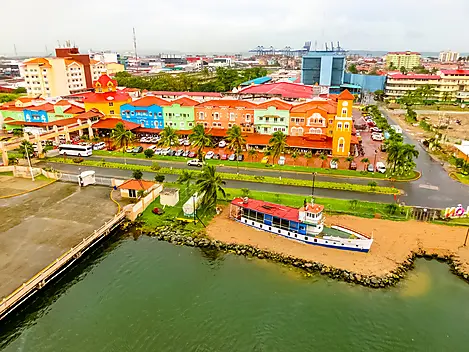
Day 1 - Colon
Colon is the second largest city in Panama, at the Caribbean entrance of the Panama Canal. Colón is today an important port, and the free trade zone created in 1953 contributed greatly to the development of the city. Colón was founded in 1850 by Americans working on the Panama railroad connecting the Atlantic and Pacific coasts through the isthmus of Panama; the city rapidly overshadowed the older Caribbean ports of Panama when the canal opened.
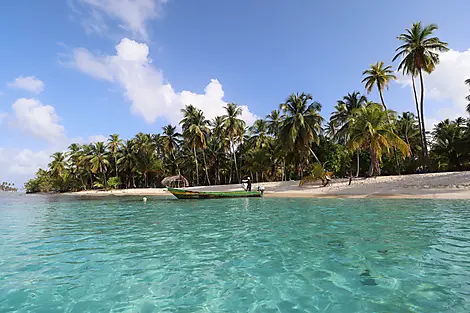
Day 2 - San Blas Islands
Located on the north-east coast of Panama, the San Blas archipelago is a string of coral islands in the heart of the Caribbean Sea. More than 300 islands and cays cover an area of 300 square kilometres offering travellers a multitude of treasures. Sheltered behind a long coral reef, the San Blas Islands are full of enchanting anchorages. The long sandy white beaches bound by crystal-clear waters will allow you to relax and enjoy incredible marine fauna before engaging with the Kunas Indian community. Still subsisting on hunting and fishing, they will welcome you in their villages of bamboo houses gathered near the beaches.
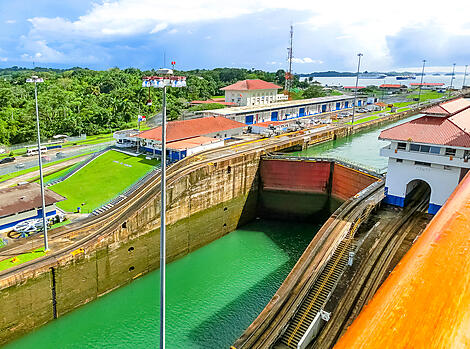
Day 3- Crossing the Panama Canal
Aboard your ship, experience something unique, that has inspired the imagination of numerous adventurers in the 20th century: sailing the Panama Canal. Its construction started in 1880 under the direction of Ferdinand de Lesseps. Abandoned then resumed, this marvel of engineering was completed by the United States and opened in 1914. The canal crosses the Isthmus of Panama and links the Atlantic to the Pacific. Including three levels of locks and by raising ships to the level of Lake Gatun, almost as if the water was a lift, it allows them to avoid having to round Cape Horn.
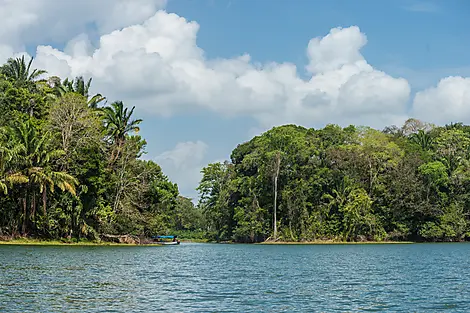
Day 4 - Fuerte Amador, Flamenco Island
An artificial peninsula situated at the Pacific entrance to the Panama Canal, Fuerte Amador is the gateway to several noteworthy sites. Right near there, the impressive Miraflores Locks are a shining example of the engineering feats deployed during the construction of the Panama Canal. Further north, in villages nestling amid dense vegetation, lives the Embera tribe, guardian of the forest and of the Chagres River. This proud people have successfully preserved their traditions and their ancestral way of life, which predate the colonisation of the region by the Spanish.

Day 5- Playa Muerto, Darien National Park
The most remote and least developed region of Panama, the province of Darien is an unspoilt land with an extremely rich variety of flora and fauna. Listed by UNESCO as World Heritage, Darien National Park offers its extraordinary scenery of rocky coastlines, mountain ranges, mangroves, rivers and creeks. Discover Playa Muerto, a tiny coastal village home to the Emberas Amerindian community. You will visit the village, attend traditional songs and dances of the locals, and admire beautiful local craft.
Day 6 - At sea
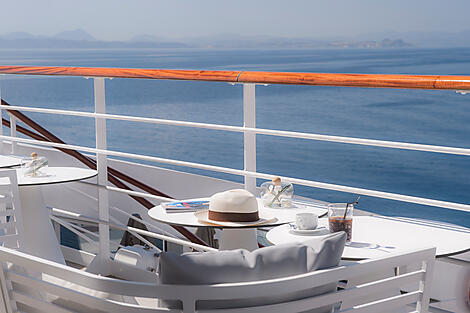
During your journey at sea, make the most of the many services and activities on board. Treat yourself to a moment of relaxation in the spa or stay in shape in the fitness centre. Depending on the season, let yourself be tempted by the swimming pool or a spot of sunbathing. This journey without a port of call will also be an opportunity to enjoy the conferences or shows proposed on board, depending on the activities offered, or to do some shopping in the boutique or to meet the PONANT photographers in their dedicated space. As for lovers of the open sea, they will be able to visit the shipâs upper deck to admire the spectacle of the waves and perhaps be lucky enough to observe marine species. A truly enchanted interlude, combining comfort, rest and entertainment.
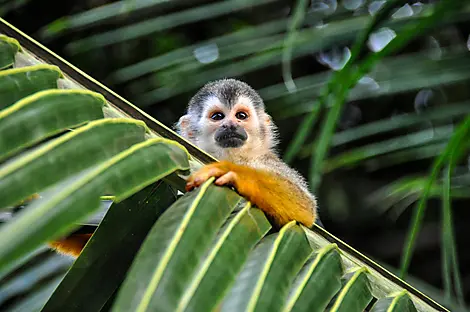
Day 7 - Quepos
Quepos makes for a charming stop-off on the Pacific coast, just next-door to the famous Manuel Antonio National Park, an untouched tropical natural reserve lined with white sandy beaches. The town's seafront is an opportunity to stroll through market stalls touting pineapples and bananas in the shade of the manchineel trees. In this coastal town criss-crossed with tree-lined streets in bloom, admire the houses and their incredible sculpted balconies. Enjoy a spot of shopping in the many traditional boutiques: pick up some handmade cotton clothing, ceramics embellished with Costa Rican designs and home décor pieces in hand-painted wood.
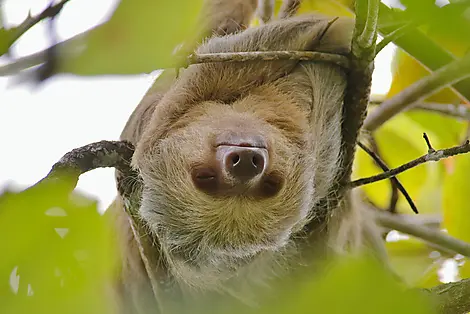
Day 8 - Puntarenas
Located on the north-east coast of Panama, the San Blas archipelago is a string of coral islands in the heart of the Caribbean Sea. More than 300 islands and cays cover an area of 300 square kilometres offering travellers a multitude of treasures. Sheltered behind a long coral reef, the San Blas Islands are full of enchanting anchorages. The long sandy white beaches bound by crystal-clear waters will allow you to relax and enjoy incredible marine fauna before engaging with the Kunas Indian community. Still subsisting on hunting and fishing, they will welcome you in their villages of bamboo houses gathered near the beaches.
Antarctica: Fly the Drake Passage

Cruise Line: Polar Latitudes Expeditions
Ship: Nova
Sailing Dates: Jan 19 2028 | Jan 24 2028 | Jan 29 2028
Port: Punta Arenas to Punta Arenas
( Note: Optional tours are available from most ports for an additional charge. )

Antarctica: Fly the Drake Passage
Day 1
Welcome to Patagonia!
Arrive in Punta Arenas, one of Earthâs southernmost cities and Chileâs gateway to Antarctica. After lunch, check into the beautifully appointed Hotel Cabo de Hornos, where our friendly ground team awaits to prepare you for your Antarctic adventure. During the afternoon, meet your fellow explorers, join your Expedition Team to be fitted for your boots and parka, biosecure your expedition gear, and learn about responsible Antarctic exploration, Zodiac landings, and tomorrowâs travel schedule â in short, everything you need to get ready for Antarctica. Afterwards, gather for your first dinner together and enjoy irresistible Patagonian delicacies in the Faro Lounge restaurant.
Day 2
All Aboard for Antarctica!
Todayâs the day. After a hearty breakfast, gear up before departing for Punta Arenas airport, where your chartered aircraft awaits to whisk you across the infamous Drake Passage â waves not included. Watch from the window in awe as icebergs appear, guarding the coast of King George Island, one of Antarcticaâs northernmost islands. Descend onto the gravel runway, where our Expedition Team awaits to assist you safely aboard Ocean Nova. After the mandatory safety briefing and drill, toast the start of your Antarctic voyage as Ocean Nova sets sail southward.
Day 3-5
Immersive Antarctica
Welcome to Antarctica in all its awe-inspiring glory. For the next few days, weâll maneuver through picturesque channels, where sculpted icebergs and an array of captivating wildlife share these dynamic waters. This is your opportunity to become more intimately acquainted with Antarctica by Zodiac, kayak, snowshoe, or while spending unhurried time ashore, taking in the silence and scale of the landscape. For those participating in our Citizen Science program, the important work of understanding and documenting this fragile environment continues. Prepare to be amazed as we encounter numerous species of penguins, seals, and whales, both along the rugged coastline and in open waters. With opportunities to visit penguin colonies and historic landing sites, we plan to take full advantage of all the White Continent has to offer.
Day 6
South Shetland Islands
Over time, volcanic activity in the South Shetland Islands has created a geology unlike any other. Here, you can expect a spectacular display of mountains, glaciers, and wildlife, including Chinstrap and Gentoo penguins. Itâs also not uncommon to share the shoreline with elephant and fur seals, while whales are often spotted offshore. Weâll settle into our Zodiacs and spend our final day in Antarctica exploring these remarkable islands.
Day 7
King George Island â Disembarkation
On the final day aboard Ocean Nova, we arrive at King George Island, Antarcticaâs most populous island. After a fond farewell to the Expedition Team, crew, and officers of Ocean Nova, disembark by Zodiac to the small Chilean station on King George Island, where your chartered aircraft awaits. Board your aircraft and watch the White Continent recede as we fly across the Drake Passage. Upon arrival in Punta Arenas, a delectable dinner and comfortable rest await you at the beautifully appointed Hotel Cabo de Hornos.
Day 8
Punta Arenas, Chilean Patagonia
Spend the day exploring the best of Chilean Patagonia on an excursion to the famous Estancia Olga Teresa, a local ranch that embodies Patagonian hospitality. Learn about life at the bottom of the world while keeping watch for wildlife, including guanacos, rhea, and Andean condors. In the evening, relax in exceptional comfort at the Hotel Cabo de Hornos or explore the vibrant city of Punta Arenas.
Day 9
Punta Arenas â A Fond Farewell
After bidding farewell to your fellow explorers, continue exploring the surroundings of Punta Arenas, set off for further adventure in Patagonia, or head to the airport for your return journey home and a well-earned rest.
Complete Antarctica: Fly In, Sail Out
Cruise Line: Polar Latitudes Expeditions
Ship: Nova
Sailing Dates: Feb 03 2028
Port: Punta Arenas to Ushuaia
( Note: Optional tours are available from most ports for an additional charge. )

Complete Antarctica: Fly In, Sail Out
Day 1
Welcome to Patagonia!
Arrive in Punta Arenas, one of Earthâs southernmost cities and Chileâs gateway to Antarctica. After lunch, check into the beautifully appointed Hotel Cabo de Hornos, where our friendly ground team awaits to prepare you for your Antarctic adventure. During the afternoon, meet your fellow explorers, join your Expedition Team to be fitted for your boots and parka, biosecure your expedition gear, and learn about responsible Antarctic exploration, Zodiac landings, and tomorrowâs travel schedule â in short, everything you need to get ready for Antarctica. Afterwards, gather for your first dinner together and enjoy irresistible Patagonian delicacies in the Faro Lounge restaurant.
Day 2
All Aboard for Antarctica!
Todayâs the day. After a hearty breakfast, gear up before departing for Punta Arenas airport, where your chartered aircraft awaits to whisk you across the infamous Drake Passage â waves not included. Watch from the window in awe as icebergs appear, guarding the coast of King George Island, one of Antarcticaâs northernmost islands. Descend onto the gravel runway, where our Expedition Team awaits to assist you safely aboard Ocean Nova. After the mandatory safety briefing and drill, toast the start of your Antarctic voyage as Ocean Nova sets sail southward.
Day 3-5
Immersive Antarctica
Welcome to Antarctica in all its awe-inspiring glory. For the next few days, weâll maneuver through picturesque channels, where sculpted icebergs and an array of captivating wildlife share these dynamic waters. This is your opportunity to become more intimately acquainted with Antarctica by Zodiac, kayak, snowshoe, or while spending unhurried time ashore, taking in the silence and scale of the landscape. For those participating in our Citizen Science program, the important work of understanding and documenting this fragile environment continues. Prepare to be amazed as we encounter numerous species of penguins, seals, and whales, both along the rugged coastline and in open waters. With opportunities to visit penguin colonies and historic landing sites, we plan to take full advantage of all the White Continent has to offer.
Day 6
South Shetland Islands
Over time, volcanic activity in the South Shetland Islands has created a geology unlike any other. Here, you can expect a spectacular display of mountains, glaciers, and wildlife, including Chinstrap and Gentoo penguins. Itâs also not uncommon to share the shoreline with elephant and fur seals, while whales are often spotted offshore. Weâll settle into our Zodiacs and spend our final day in Antarctica exploring these remarkable islands.
Day 7-8
Drake Passage
Join our Polar Experts as they share their extensive knowledge of Antarctica, from its enchanting wildlife to its bold history. Participate in our pioneering Citizen Science program or sit back and take in this fabled journey while catching glimpses of rarely seen wildlife. Keep your binoculars handy to identify the many seabirds that escort our ship as we cross the Antarctic Convergence into Atlantic waters and temperatures begin to rise.
Day 9
Ushuaia, Argentina â Disembarkation
On the final day of our expedition, we arrive beneath the peaks of Ushuaia, Earthâs southernmost city and capital of Argentine Tierra del Fuego. After a hearty breakfast and a fond farewell to the Expedition Team, officers, and crew of Ocean Nova, we disembark in the morning, either to begin your journey home or continue your adventures in Patagonia.
Authentic Japan [Tokyo to Busan]
![Authentic Japan [Tokyo to Busan]](/images/packages/full(7).jpg "Authentic Japan [Tokyo to Busan]")
Cruise Line: Ponant Cruise
Ship: Le-Jacques-Cartier
Sailing Dates: Mar 11 2028
Port: Tokyo (Japan) to Busan (South Korea)
( Note: Optional tours are available from most ports for an additional charge. )
![Authentic Japan [Tokyo to Busan]](/images/packages/extraimages/7662_Tokyo(Japan)toBusan.webp "Authentic Japan [Tokyo to Busan]")
Authentic Japan [Tokyo to Busan]
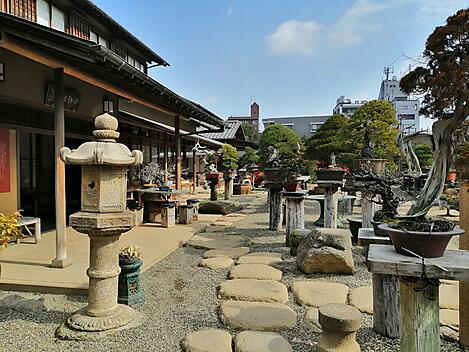
Day 1 - Tokyo
Whether youâve been there or not, Tokyo is a dream place and always will be. Seated on the east coast of Honshu island, it is one of the largest cities in the world - with more than 13 million inhabitants intramural â, and one of the most active. With its 23 districts, the Japanese capital breathes life into a unique and motley universe: from the high-tech Akihabara district to the quiet, historical streets of Asakusa, through the night-time effervescence of Shinjuku and the trendy boutiques of Harajuku, Tokyo and its inhabitants will surprise you for sure. Everything seems somehow planned to make you want to stay. And itâs not Tokyoâs tradition of fine food that will make you change your mind.
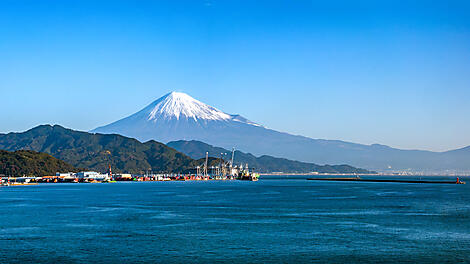
Day 2 - Shimizu
The former city of Shimizu is located on Japanâs Pacific coast, to the south-west of Tokyo. In 2003, it was incorporated into the neighbouring city of Shizuoka, hence the âformerâ status. From its port, considered one of the three most beautiful in Japan, the panorama over Suruga Bay is unique. You will be able to visit Kunozan Toshogu, a Shinto shrine located south-east of Shizuoka. Miho no Matsubara Beach, lined with a magnificent pine grove, offers breathtaking views of the UNESCO-listed Mount Fuji on clear days.
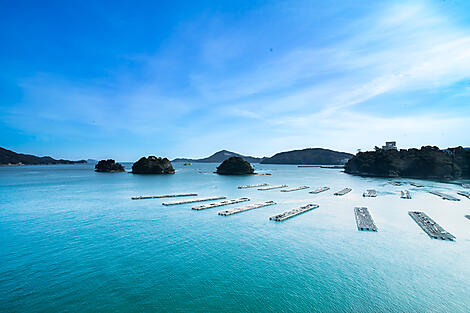
Day 3 - Toba
Toba is a coastal city located in Japanâs Mie Prefecture, on the shores of the Pacific Ocean. Situated in the Ise-Shima National Park, Toba has given its name to majestic bay sheltering a string of small islands, famous for the beauty of their forests and the production of cultured pearls. You will have the possibility of discovering the Ise Shrine, residence of the Imperial family and venerated by the Japanese people as the âsoul of Japanâ.
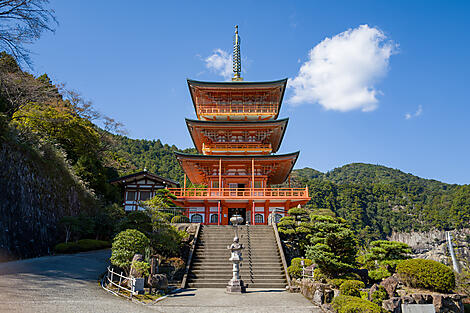
Day 4 - Katsuura
Located in a peaceful cove overlooking the Pacific Ocean, Katsuura is a true coastal paradise home to the largest number of natural open-air hot springs in the entire Wakayama Prefecture. Numerous rocky islets are scattered across the calm waters of this secluded bay, providing delicious local seafood for you to enjoy as you savour the fresh air of this timeless place. Katsuura is part of Japanâs largest peninsula, the Kii Peninsula, and home to Kumano Nachi Taisha Shrine, one of the Kumano Sanzan, a religious complex dedicated to the three sacred mountains of Kumano.
Day 5 - Osaka
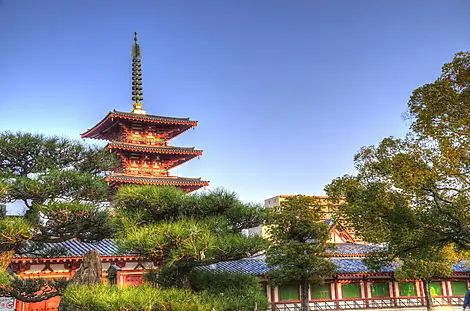
Like its big sister Tokyo, Osaka is the product of ancestral traditions and amazing technological innovations. And despite its size, its location on the Pacific Ocean give it a sense of serenity. The main historic landmark is the 16th century Osaka Castle, which stands proud in the midst of majestic skyscrapers. The lively streets of Dotomburi and the bizarre Shinsekai district attract thousands of locals and visitors. A multitude of restaurants offer menus full of regional specialities: takoyaki, made with octopus, and other succulent dishes such as kushikatsu kebabs.
Day 6 - Tomonoura
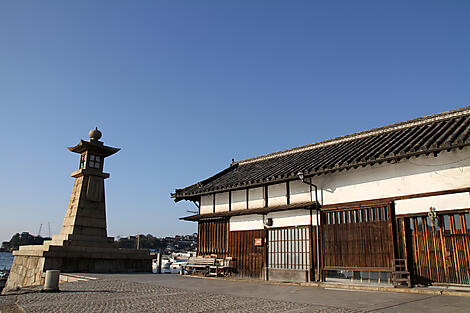
Anchored to the south-eastern end of the Nunakama Peninsula, facing the calm and clear waters of the Seto Inland Sea, Tomonoura is a destination particularly appreciated for its authentic and old-fashioned atmosphere that gives it an incomparable charm. In the past used as a port where boats would moor while waiting for a favourable wind, the charming and picturesque village now serves to inspire many filmmakers and artists. With good reason, since its craggy landscapes, its cherry trees in blossom, its gentle way of life, its traditional wooden houses and its port, preserved since the Edo era, notably enabled the artist Hayao Miyazaki to make the animated film Ponyo.
1 available excursion
The Hells, Beppuâs hot springs
Day 7 - Miyajima Island
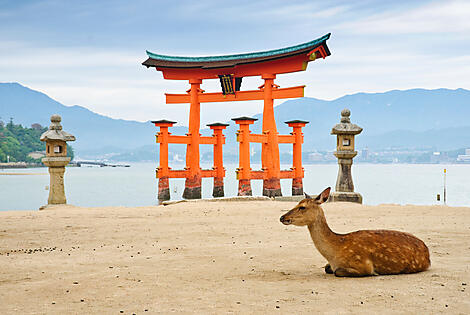
At the heart of the Inland Sea, Miyajima, the âisland sanctuaryâ will reveal its treasures. In the background you will see the Shinto Grand Sanctuary, whose entrance is guarded by a magnificent vermillion âToriiâ. Considered to be one of the most beautiful sites in the Japanese islands, you will be transported by the unique character and the serenity of this sacred site.
1 available excursion
Itsukushima Shrine and Omotesando Street
Day 7-8 - Hiroshima
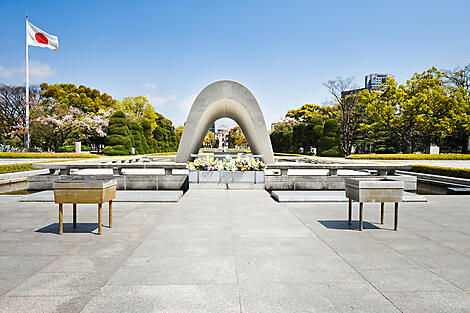
Visiting Hiroshima is a moving experience. The town spreads along Honshu Island, along the inside coasts of Seto. While firmly focused on the future, Hiroshima doesn't forget its past, and a visit to the Peace Memorial Park and Genbaku Dome is a must. You'll enjoy the city's modern, cosmopolitan atmosphere and effervescent nightlife just as much as the peaceful stillness of its natural parkland areas such as splendid Shukkei-en, the town's historic garden.
1 available excursion
Hiroshima Museum and Peace Memorial Park
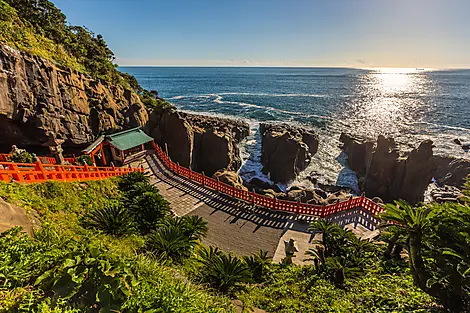
Day 8 - Miyazaki
The cradle of Japanese mythology, Miyazaki is a hidden treasure on the southern coast of KyÅ«shÅ«. Known for its climate, its golden beaches and its spectacular rocky formations, it is an invitation to exploration and contemplation. In the heart of the city, the Miyazaki-jingÅ« Shinto shrine stands majestically, surrounded by ancient forests and peaceful gardens, in which an atmosphere of serenity reigns. Make the most of the authenticity of this city with fascinating local culture and, during the visit of the Miyazaki Shrine, fall under the spell of the kagura, a dance and song performance by the shrineâs priests and helpers.
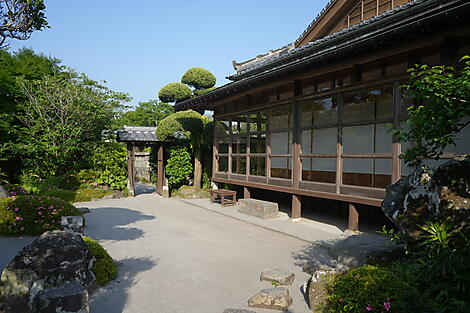
Day 9 - Ibusuki, Kagoshima
Located in the heart of Kagoshima Prefecture, Ibusuki is a coastal town renowned for its many hot springs and hot sand baths on the seashore. A true seaside resort, the town stretches across the southern tip of the Satsuma Peninsula, with its main centre extending along the coast and overlooking Kagoshima Bay. It offers spectacular views of Mount Kaimon, also called Satsuma Fuji due to its resemblance to Mount Fuji. You will discover Chiran, a historic village in Kagoshima where you will find a preserved samurai district with houses and gardens dating back around 250 years. The town is also home to the Chiran Peace Museum. Located on the site of the former Chiran Army Air Base, it serves as a memorial to the young men who sacrificed their lives as kamikaze pilots during the Second World War.
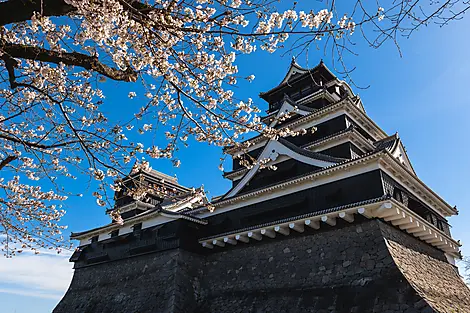
Day 10 - Kumamoto
In the heart of Kyūshū, Kumamoto embodies the understated elegance of traditional Japan. Its majestic castle dominates a city steeped in history, surrounded by serene gardens and spectacular volcanic landscapes. Just outside the city, Mount Aso offers unforgettable experiences: hikes along smoking volcanic ridges, panoramic vistas, and hot-spring villages nestling in lush greenery. Kumamoto reveals another side of Japan, both intimate and grandiose, where culture, nature and lifestyle converge
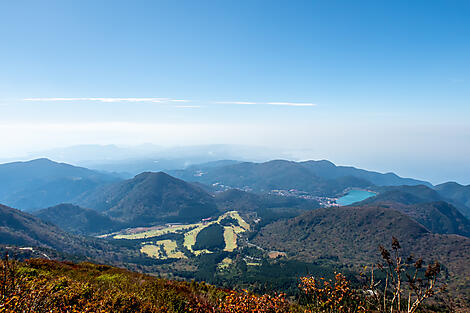
Day 11 - Unzen, Unzen-Amakusa National Park
Located in the north of the Shimabara Peninsula, the town of Unzen lies at the heart of Unzen-Amakusa National Park, Japanâs first national park, founded in 1934. Created to preserve the regionâs culture and nature, this natural haven covering more than 280 km² (108 sq. miles) combines a spectacular volcanic environment with the landscapes of the Amakusa Islands. During this enchanting interlude, you will be able to discover the parkâs legendary high-temperature hot springs, volcanic gas vents, and highly diverse wildlife. With impressive natural phenomena and open views over the sea, this stop offers an elegant immersion in one of the most emblematic environments of southern Japan.
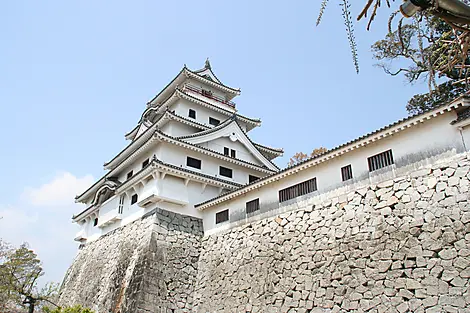
Day 12 - Sakitsu, Unzen-Amakusa National Park
Facing the mythical island of Kyushu, between the Yatsushiro and Ariake seas, the island region of Amakusa both surprises and captivates. Composed of some one hundred verdant islets surrounded by stunning seabeds, the Japanese archipelago was once a refuge for many Christians fleeing the ban on Catholicism in the 17th century during the Edo period. Nestled on the shore of a cove opening onto the calm waters of Yokaku Bay, Sakitsu is a charming fishing port. Immerse yourself in its Christian heritage, notably through a visit to its emblematic church blending Western and Japanese cultures. Rebuilt in 1934, it is now a UNESCO World Heritage Site
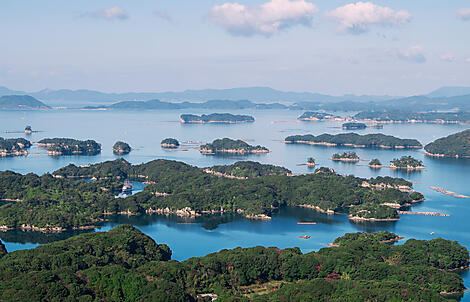
Day 13 - Nagasaki
Located on the north-west coast of Kyushu, Nagasaki will impress you by its rich heritage. Despite the destruction in 1945, you can visit several ancient sites, including the beautiful 19th-century Catholic Church of Oura and its garden, the sanctuary of Suwa Shrine or several Buddhist temples. A visit to the Atomic Bomb Museum gives you insight into the extent of the damage caused by the nuclear attack. Close by, a walk in the Memorial Peace Park leads you to a collection of objets d'art offered as a gift from Japan to the world.
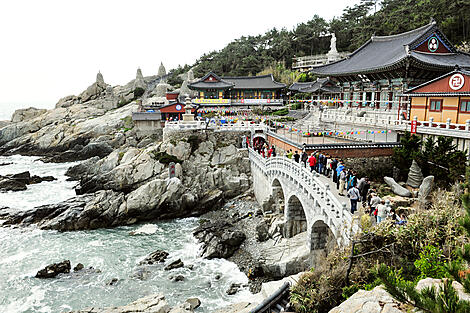
Day 13 - Busan
With around four million inhabitants, Busan is the second largest metropolis on South Korea, after Seoul. This dynamic harbour city, located in the south-east, surrounded by the warm waters of the Sea of Japan, benefits from a mild, pleasant climate. Youâll find delightful simply to stroll around the lively streets and explore the cityâs outstanding cultural heritage of art galleries, museums, and Buddhist sites, such as the Haedong Yonggungsa temple, which elegantly sits on the waterfront. Rich too in magnificent beaches and superlative natural landscapes, Busanâs peaceful atmosphere will win you over, as will its inhabitants, whom youâll have the pleasure of meeting.
11 Days - Alaskan Coastal Adventures & Denali Discovery Cruise Tour

Cruise Line: Windstar Cruise
Ship: Star Seeker
Sailing Dates: Jun 17 2028 | Jul 22 2028 | Aug 05 2028
Port: Vancouver to Juneau
( Note: Optional tours are available from most ports for an additional charge. )

The Geographic North Pole and the east coast of Greenland
.jpg "The Geographic North Pole and the east coast of Greenland")
Cruise Line: Ponant Cruise
Ship: Le-Commandant-Charcot
Sailing Dates: Jun 26 2028
Port: ReykjavÃk (Iceland) to Longyearbyen, Spitsbergen (Norway)
( Note: Optional tours are available from most ports for an additional charge. )
toLongyearbyen.webp "The Geographic North Pole and the east coast of Greenland")
The Geographic North Pole and the east coast of Greenland
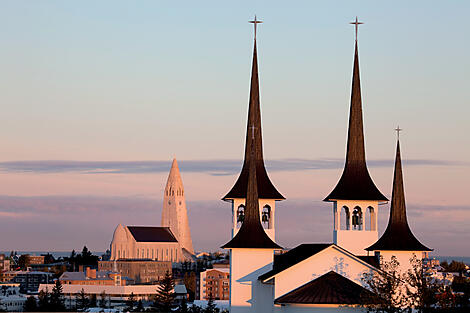
Day 1 - ReykjavÃk
Icelandâs capital stretches along the edge of a vast bay in the west of the country. Perlan, the âPearl of ReykjavÃkâ, a museum located on âOskjuhlið hill, offers a panoramic view of the lush, green landscapes. A little further, one can easily spot the signpost showing the way to the evangelical HallgrÃmskirkja church, and to the historical centre where one can stroll along the SkólavördustÃgur and the Laugavegur, two lively streets with charming small shops. For some relaxation just outside of the city, visitors have the opportunity to visit the Reykjanes peninsula and its famous thermal lagoons of the Blue Lagoon.
Day 2 - At sea aboard Le Commandant Charcot
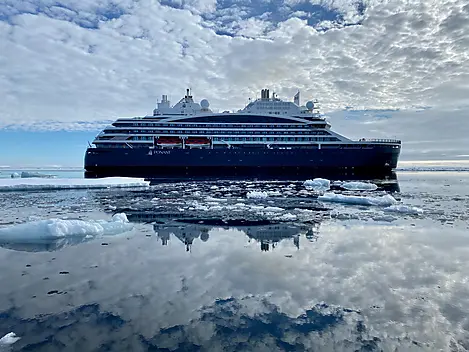
Spend exceptional moments sailing aboard Le Commandant Charcot, the worldâs first luxury polar exploration vessel and the first PC2-class polar cruise ship capable of sailing into the very heart of the ice, on seas and oceans which the frozen conditions render inaccessible to ordinary ships. Le Commandant Charcot is fitted with oceanographic and scientific equipment selected by a committee of experts. Take advantage of the on-board lectures and opportunities for discussion with these specialists to learn more about the poles. Participate in furthering scientific research with PONANT and let us discover together what these fascinating destinations have yet to reveal to us.
Day 3 - Exploring the Blosseville Coast
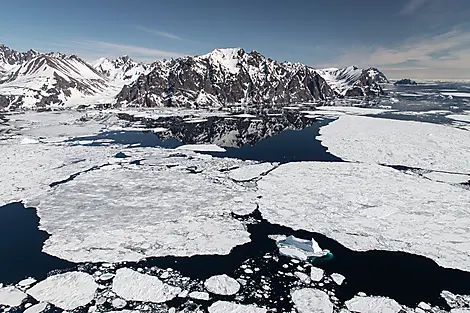
Aboard your ship, follow in the footsteps of Jules Poret de Blosseville, a French explorer and sailor. In 1833, he set off to discover this isolated and unexplored part of eastern Greenland aboard La Lilloise, an adventure with a fatal outcome. The uninhabited territory that bears his name lies to the south of Scoresby Sound. Surrounded by ice, icebergs and pack ice - thin or thick, flat or pronounced - as far as the eye can see, Blosseville Coast is a wild and distant place to which very few people have access. Exploring it means a slow immersion into the heart of a frozen, almost unreal desert, where the variations in light transform oneâs perception of the landscape. In the kingdom of the polar bears, Le Commandant Charcot, a silent ship open to the exterior, will offer exceptional moments observing Arctic wildlife, through a series of encounters.
Day 4-5 - Exploration of Ittoqqortoormiit Region
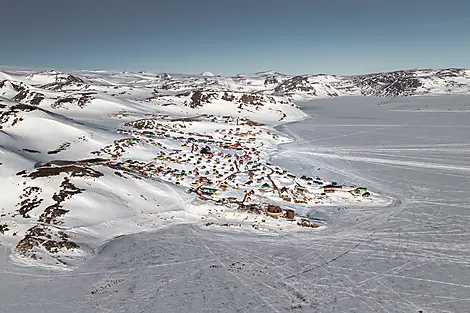
On the East coast of Greenland, in the Ittoqqortoormiit region that is covered with snow and ice for nine months of the year, you will have the rare opportunity of immersing yourself in the heart of an isolated territory and exploring the beauty of its infinite polar whiteness. The high alpine mountains punctuate the sky and gradually reveal their dark rock edges beneath a coat of snow. Located at the entrance to the longest system of fjords in the world, sits the village of Ittoqqortoormiit, one of the northernmost inhabited places on the East coast. Its name means âgreat houseâ in Greenlandic and it is home to the last hunters of the polar region, whose ancestral way of life you will encounter. As soon as the thickness of the ice floe allows it, the hunters set out on the trail of walruses, seals, narwhals, musk oxen and polar bears, travelling by traditional dog sleds. On these expanses of immaculate snow, the silence is broken only by the sounds of the dogs, the grating of a sled coming back from a run or of footsteps on the ice. You will discover Inuit traditions through privileged and festive moments on the ice floe and in the village.
Day 6 - Sailing ice floes along Greenland
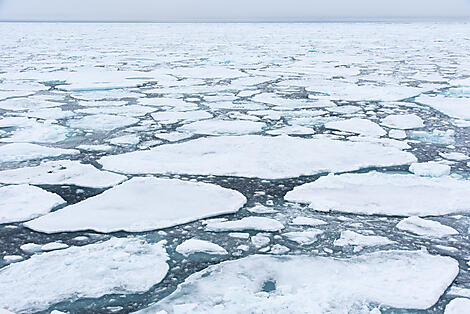
The north-east of Greenland is renowned for being home to one of the oldest and thickest layers of ice on the planet. Aboard your ship, you will have the unique opportunity of sailing to the heart of this icy wilderness, many thousands of years old, and will travel along one of the world's most isolated coasts, between drifting ice and blue icebergs.
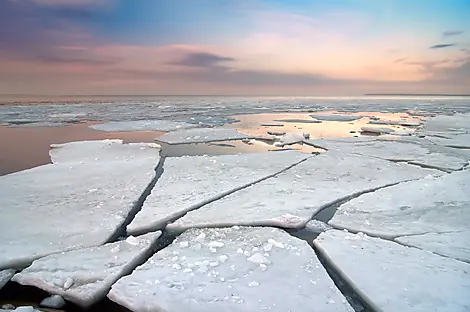
Day 7-9 - Navigating through the sea ice
Enjoy the absolutely unique experience of sailing to the heart of the ice floe, this vast expanse of virgin, immaculate ice. The landscapes are constantly changing, shifting from a smooth, flat wilderness to a chaos of ice, then to channels of open water. Your ship will sail along these naturally open channels and through the areas where the frozen layer is thinnest, offering you the chance to experience magic maritime moments in the midst of drifting sea ice. It will also often be an opportunity to see a particular kind of fauna, totally dependent on the ice floe.
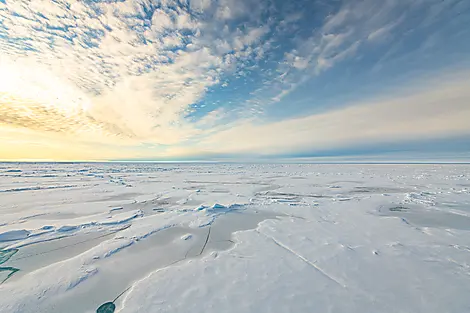
Day 10-11 - Geographic North Pole
Defined by a 90° North latitude, the Geographic North Pole lies on the Earthâs rotational axis, at the intersection of all meridians. Plunged into darkness for six months of the year, then lit by the sun for the following six months, this mythical site, permanently covered in ice and remote from any land, has fascinated generations of explorers. So far, only a very few people have ever reached it: an exploit which is now accessible to you aboard Le Commandant Charcot.
Day 12-14 - Navigating through the sea ice
Enjoy the absolutely unique experience of sailing to the heart of the ice floe, this vast expanse of virgin, immaculate ice. The landscapes are constantly changing, shifting from a smooth, flat wilderness to a chaos of ice, then to channels of open water. Your ship will sail along these naturally open channels and through the areas where the frozen layer is thinnest, offering you the chance to experience magic maritime moments in the midst of drifting sea ice. It will also often be an opportunity to see a particular kind of fauna, totally dependent on the ice floe.
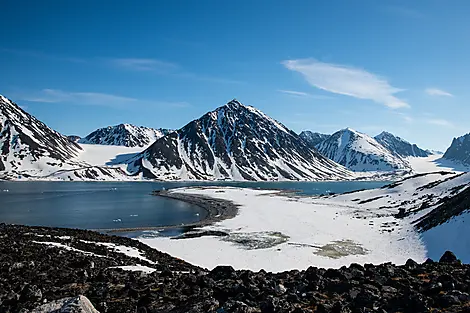
Day 15 - North-West region of Spitsbergen
A kingdom of contrasts and natural marvels dotted with islands and peninsulas, northwest Spitsbergen fascinates with its preserved beauty. On these pristine lands, infinity unveils itself, treating the eyes to beauty sculpted by nature and enhanced by the changing light. The fjords bathed by icy waters, the jagged mountains and the imposing glaciers stand majestically before you, like monumental sculptures. In these lands, where souls are filled with deep serenity, only the murmur of broken ice, bearing mysteries and legends, disturbs the calmness. Aboard our Zodiacs and in the company of naturalist-guides, get as close as possible to this unique fauna and discover this centre for scientific expedition departures. In the distance, majestic whales glide silently through the glacial waters, whereas seals, walrus and Arctic foxes add a playful touch of life. As Svalbard reindeer wander the vast expanses, Arctic terns liven up the polar sky with their gracious flight and polar bears, which you may be lucky enough to see, patrol magnificently along the icy shores.

Day 16 - South-West Region of Spitsbergen
Set sail for southwest Spitsbergen, immerse yourself in this environment unlike any other and explore its unexpected riches. In this natural sanctuary, the polar light combines with the changing weather of the Arctic, a big blue sky, the horizon scattered with clouds, the enveloping mist erasing the border between the land and the sea. Follow in the footsteps of the first explorers and admire the majestic fjords and glaciers sculpting the breathtaking landscapes, their icy waters shimmering beneath the midnight sun. The fjords, veritable cathedrals of ice, reveal their millennial secrets, while the glaciers, like sleeping giants, move slowly towards the sea, setting free sparkling icebergs. On the water, you might spot belugas and rorquals, while on the shores, seals and Arctic foxes add a touch of mystery to this living tableau, where the steep cliffs become breeding grounds for thousands of seabirds, like guillemots. Southwest Spitsbergen is an ode to nature in its rawest and purest form.
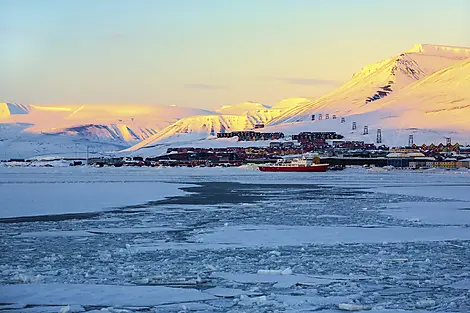
Day 17 - Longyearbyen, Spitsbergen
Longyearbyen is the capital of the Norwegian Svalbard archipelago, located on Svalbardâs main island, and is the northernmost territorial capital on the planet. With winter temperatures dropping to below 40°C, the landscapes of this mining town are simply breathtaking. The glaciers, the mountains stretching as far as the eye can see and the untouched nature, make you feel like youâre in completely unexplored territory.
*Prices are per person, based on double occupancy. Prices do not include Government Fees & Taxes. Pricing and availability subject to change without notice. STIC Travels Private Limited reserves the right to refuse or honor any prices / sailings that are erroneously printed or quoted. Terms & Conditions apply.

We Accept: 

Secured By: 
Copyright © STIC GSA Services Pvt. Ltd. All rights reserved